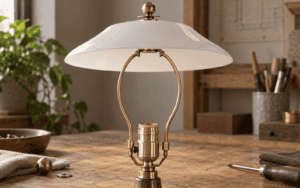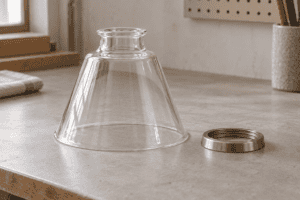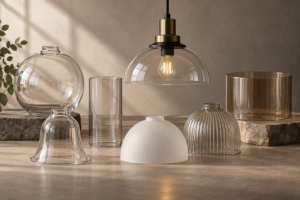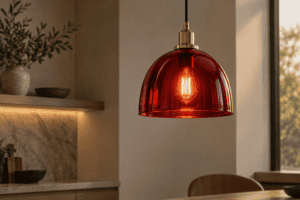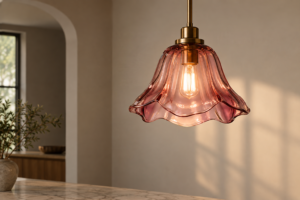
A rose glass lamp shade is a glass shade with a rose, blush, pink or warm red appearance. The word rose describes the visible result, not one universal glass recipe. For a replacement, fit comes first. For an OEM project, define the base glass, color target, light transmission, surface finish, profile, fitter and inspection conditions before comparing prices.
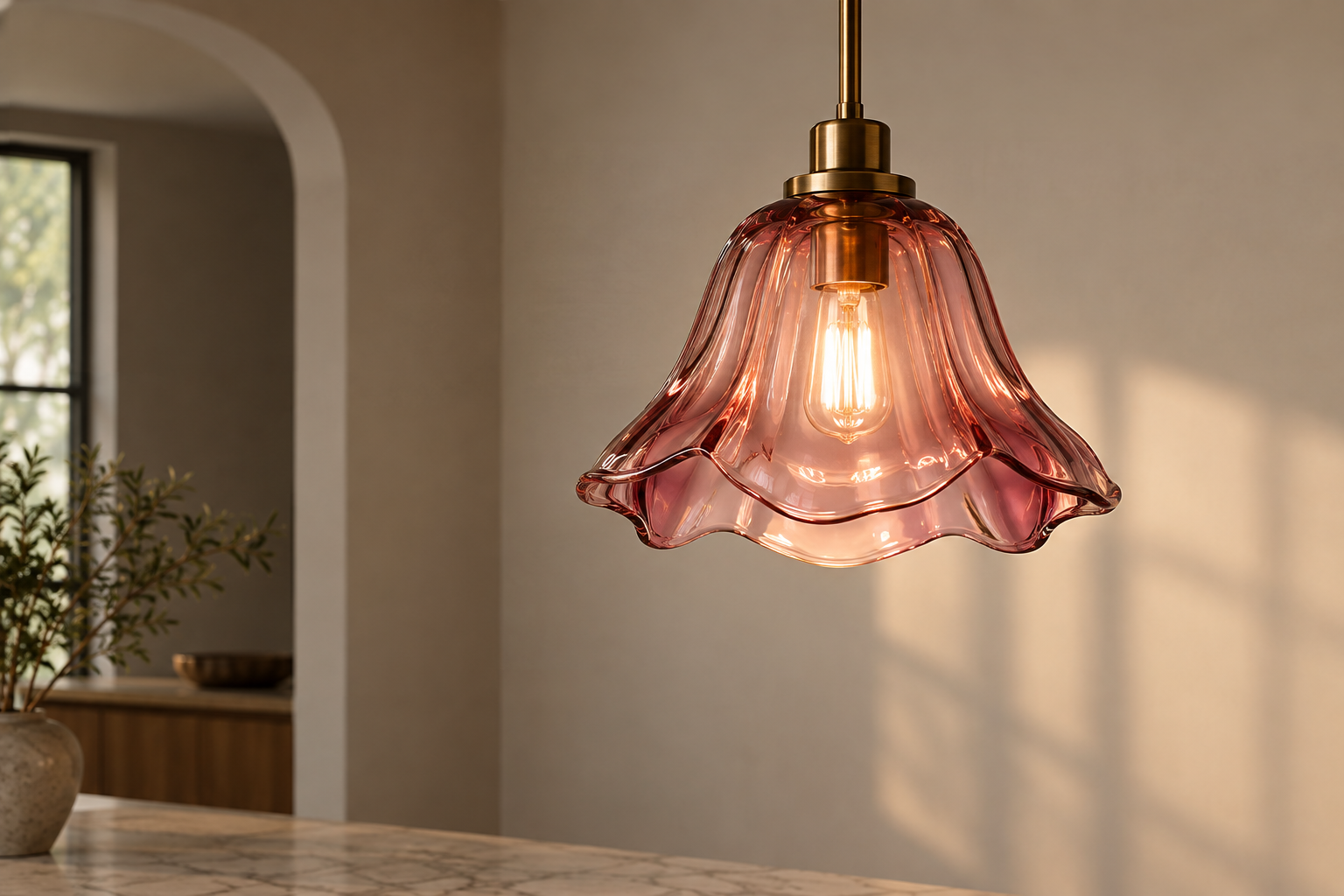
What does rose glass mean in a lamp shade?
In lighting catalogs, rose glass usually means a warm pink, blush, rose-red or soft cranberry appearance in a glass light cover. It may be transparent, opalescent, satin, ribbed, painted or combined with another surface treatment. The name helps a buyer describe the look, but it does not tell a factory enough to reproduce the part.
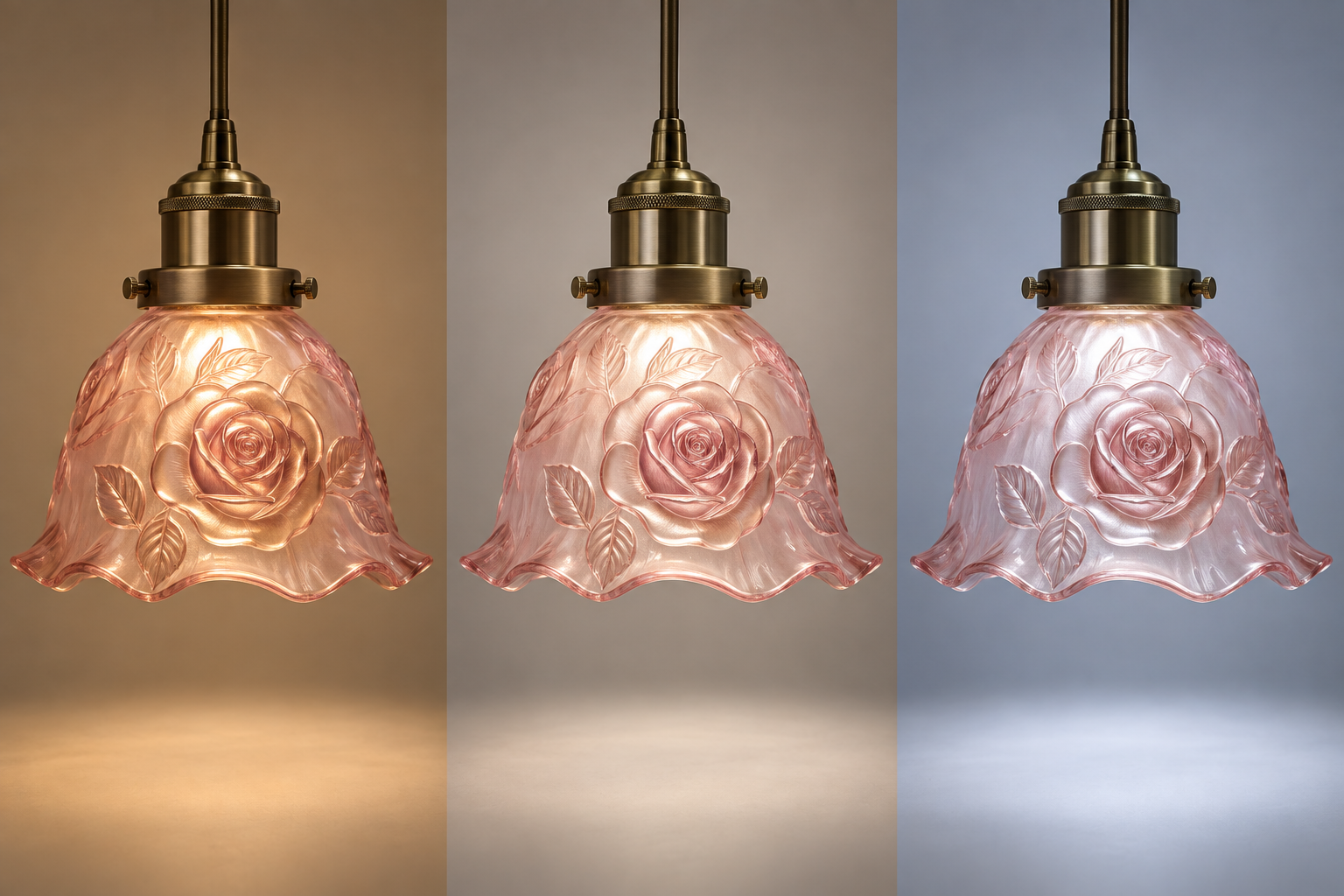
The distinction matters because a rose sample can look different when it is backlit, viewed against a dark wall or placed beside a cool white LED. The same shade can look pale pink in a showroom and much deeper near a warm light source. A sourcing brief should therefore use the color name as a starting point, then add a physical master sample, a light source and acceptable variation.
The Metropolitan Museum of Art rose bowl record shows why historical names can be loose. The object is described as rose-colored satin glass and also as blown opaque cranberry glass. A modern seller may use rose, pink, cranberry or ruby to signal a similar family of warm red color, even though the glass structure and production route may differ.
| Catalog wording | What it may describe | What a buyer should confirm |
|---|---|---|
| Rose glass | Warm pink, blush or rose-red appearance | Target color, transmission and acceptable batch variation |
| Pink glass | Pale pink body glass, coating or opalescent glass | Whether the color is in the glass, on the surface or both |
| Cranberry glass | Deep pink to red historical or decorative glass family | Base glass, transparency, wall thickness and color gradient |
| Ruby or gold ruby glass | Deep red glass associated with gold coloring methods | Whether the term is historical, decorative or a current production specification |
| Rose petal shade | A profile or decorative silhouette, not necessarily rose-colored glass | Profile, fitter, rim form and actual glass color |
The safest rule is simple: treat rose as a color brief, not as a complete material specification.
Rose glass, pink opalescent, cranberry and ruby: what is the difference?
These terms overlap in retail language but answer different questions.
Rose or pink describes appearance. Pink opalescent describes a milky or softly diffused optical effect in addition to color. Cranberry and ruby can refer to historical glass families, deeper red appearances or specific production traditions. A rose petal shade describes a flower-like profile and may be clear, frosted, colored or painted.
JX's pink opalescent glass lamp shade guide is the better destination when diffusion and milky body glass are the main decision. A rose glass project should not be routed there automatically because a transparent rose shade and an opalescent pink shade can distribute light very differently.
The Corning Museum of Glass definition of gold ruby describes deep red glass colored by gold chloride. That is useful historical context, but it does not mean every modern rose shade is gold ruby. The product name should follow the actual material and process record.
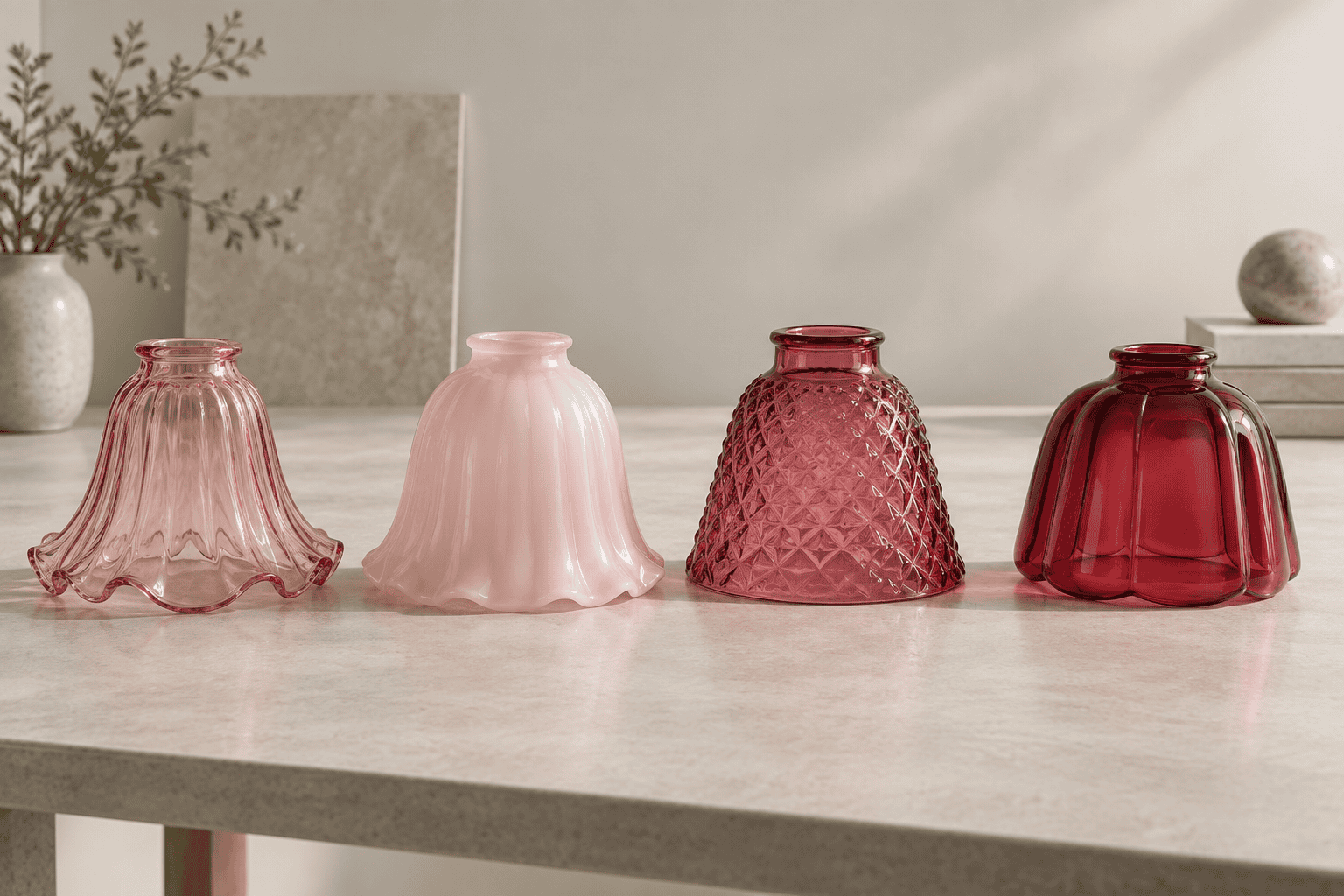
| Visual family | Light transmission | Common buyer question |
|---|---|---|
| Transparent rose | Bulb and background remain visible through the shade | Will the color stay even when the bulb is lit? |
| Soft opalescent pink | Light is diffused and the bulb is less exposed | Will the shade still look pink without becoming too white? |
| Satin or frosted rose | Reflection is softened and glare may be reduced | Is the finish on the glass surface or built into the body? |
| Cranberry or ruby red | Color may be stronger and less neutral | Will the shade make the room or product display look too warm? |
| Rose with painted or coated detail | Color can be local rather than full-body | How will the decorative area resist handling and cleaning? |
How rose glass changes the light
Rose glass does not have one fixed lighting behavior. Three variables usually dominate the finished appearance:
- The color and thickness of the glass body.
- The direction and color temperature of the light source.
- The background and distance behind the shade.
A transparent rose shade may transmit a warm pink glow while also reflecting cooler highlights from the room. An opalescent shade can appear pale when unlit and more saturated when the bulb is close to the glass. A thick rim can look darker than the center because more material is seen through the same viewing angle.
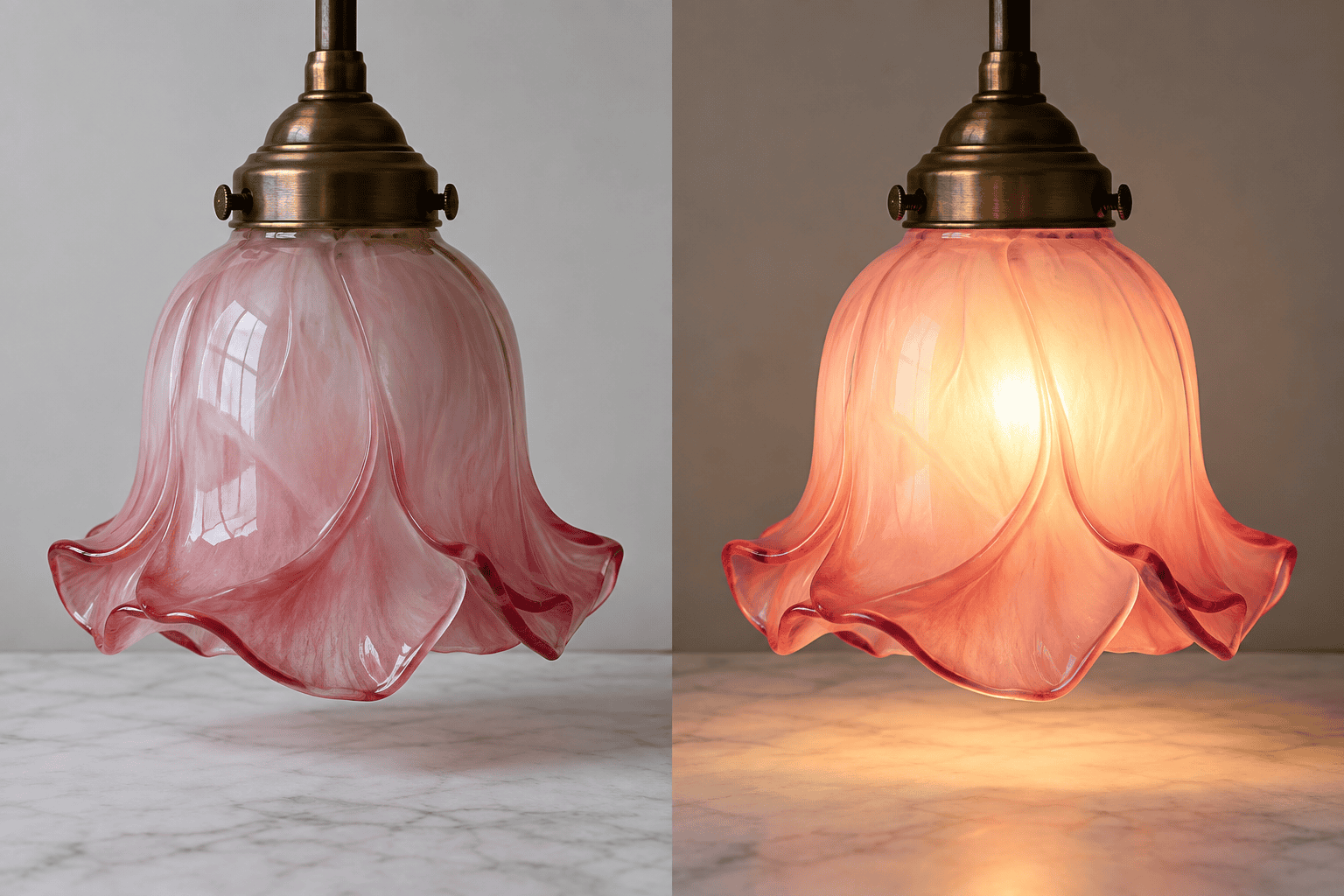
| Approval condition | What to observe | Why it matters |
|---|---|---|
| Unlit daylight | Body color, surface marks and rim uniformity | Separates the glass or finish from the lamp output |
| Warm LED | Glow, saturation and shadow color | Matches many hospitality and residential applications |
| Neutral LED | Color balance and visual consistency | Helps compare samples without a strong warm bias |
| Cool LED | Violet, gray or washed-out shifts | Shows whether the color target is too dependent on warm light |
| Backlit against a light wall | Edge, center and fitter transition | Reveals thin spots, gradients and uneven coverage |
If a buyer approves only a product photograph, the supplier may be judged against a color that was created by the camera, white balance or surrounding room. A two-light approval record is more repeatable.
Which rose glass profile and fitter should you choose?
Color cannot rescue a wrong fitting interface. Before selecting a rose glass profile, record the fixture type and the way the shade is retained. The glass lamp shade fitter types guide explains why a gallery, neck, threaded opening, clip support or top fitter changes the replacement decision.
For a table or desk lamp, check the bottom opening, gallery contact, shade height and widest diameter. For a pendant, check the top opening, socket hardware, retaining ring and clearance around the lamp. For a wall sconce, check the mounting direction and whether the shade rests on a ring or is secured from the side.
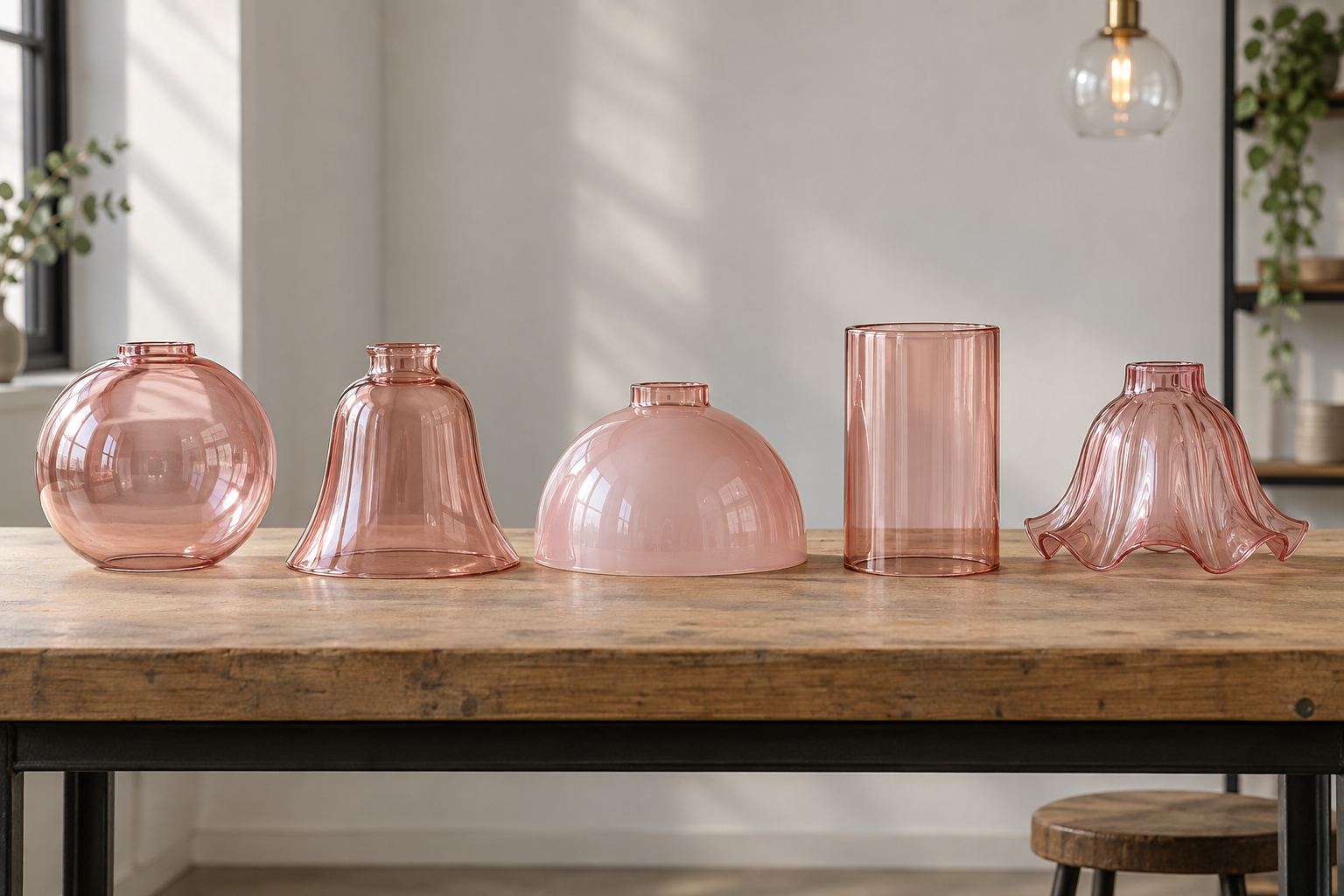
| Profile | Where it may work | Fit and light checks |
|---|---|---|
| Globe | Pendants, table lamps and clustered fixtures | Opening diameter, retaining ring and bulb clearance |
| Bell | Table lamps, sconces and pendants | Neck length, shoulder angle and lower diameter |
| Dome | Ceiling, pendant or reflector applications | Top support, rim load and downward light spread |
| Cylinder | Wall lights, pendants and compact fixtures | Straightness, opening roundness and socket position |
| Flower or ruffled form | Decorative sconces and residential fixtures | Rim consistency, orientation and handling protection |
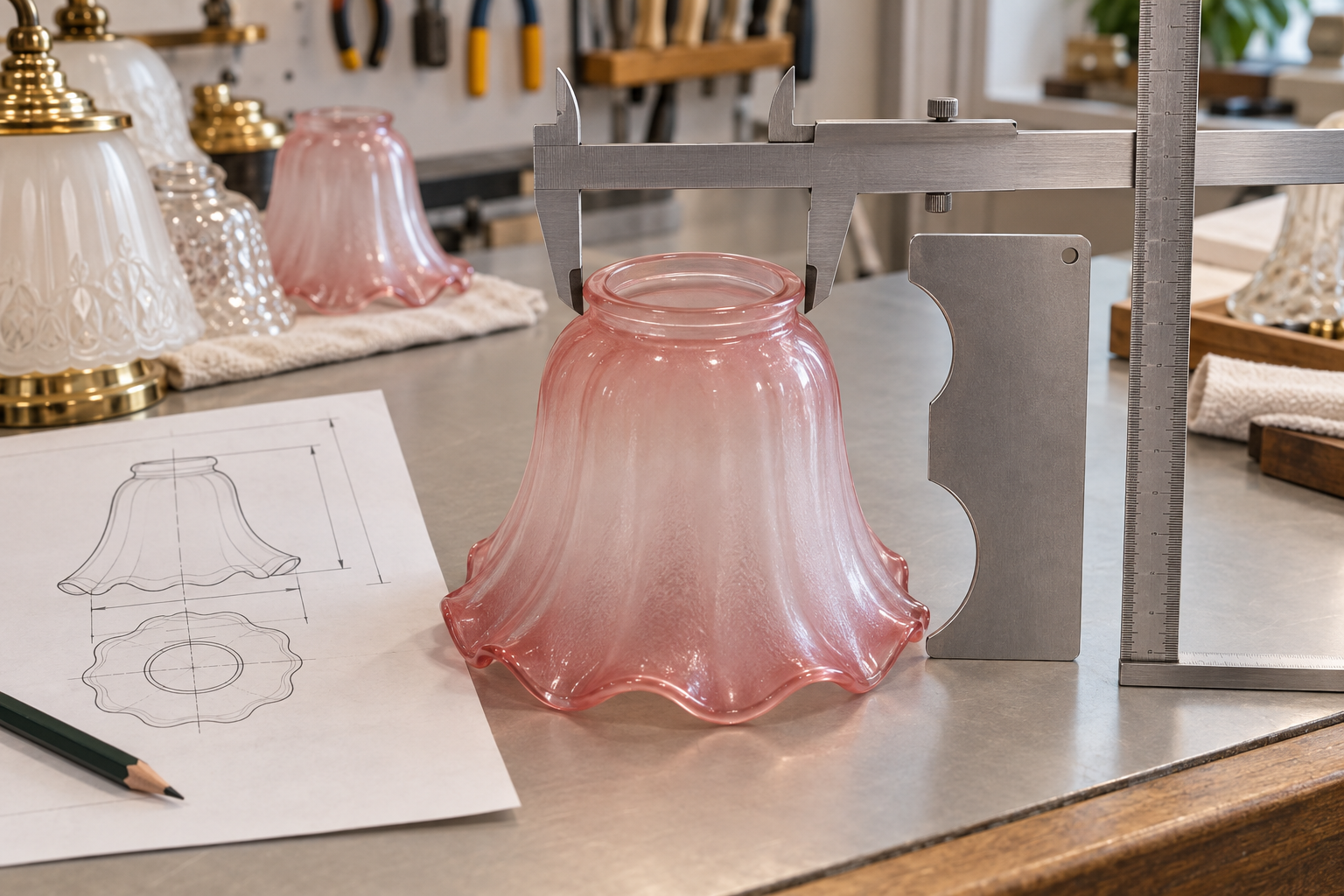
At minimum, record:
- fitter opening or neck diameter;
- overall height;
- widest diameter;
- rim thickness and support surface;
- retention method;
- bulb type, wattage or LED specification;
- distance from the bulb to the glass;
- fixture orientation.
For a custom quote, send a side profile, top or bottom view, fitter detail and photos with a ruler. JX's technical drawing checklist can help organize those details.
Replacement matching for rose glass lamp shades
Replacement work is harder when the original shade is old, because color, surface and fit may have changed at different rates. Dust can make a pale rose shade look gray. A warm bulb can make clear glass appear pinker. A repaired rim can change the seating height. A photograph taken indoors may also hide a color gradient.
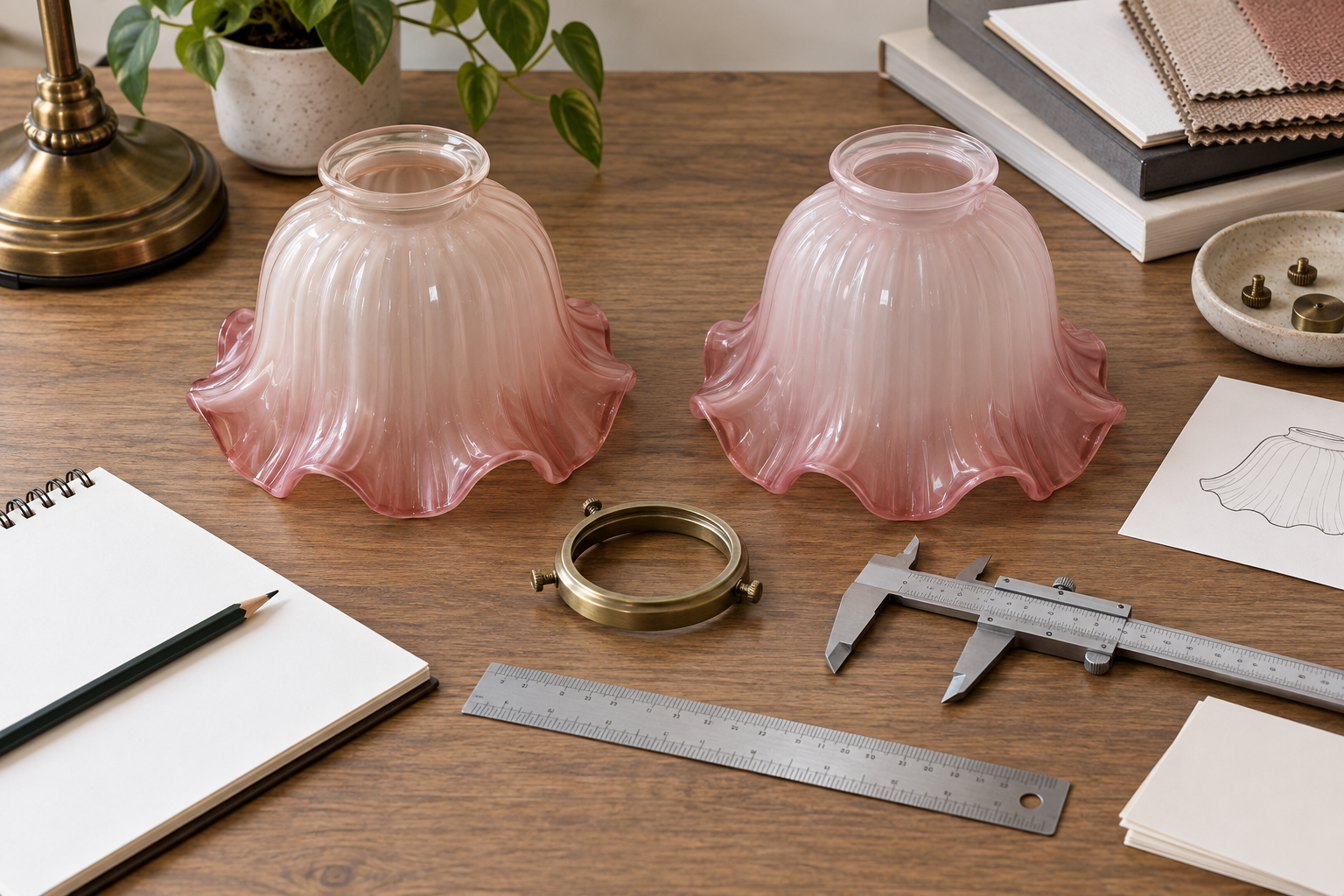
Use this sequence:
- Photograph the shade in daylight and with the fixture switched on.
- Measure the fitter, height, widest diameter and rim condition.
- Note whether the original is transparent, opalescent, satin, ribbed or decorated.
- Record the bulb and the background used for the comparison.
- Send the original or a removable sample when the color is difficult to describe.
- Approve the replacement by fit and appearance, not by color name alone.
Do not assume that "rose" means the same thing as the original manufacturer's color code. If the old shade is part of a matched set, retain one approved master and compare every replacement against it.
Surface and finish choices for rose glass
The rose effect may come from the body glass, a surface treatment, applied color, painted decoration or a combination. Each route changes how the part should be handled and inspected.
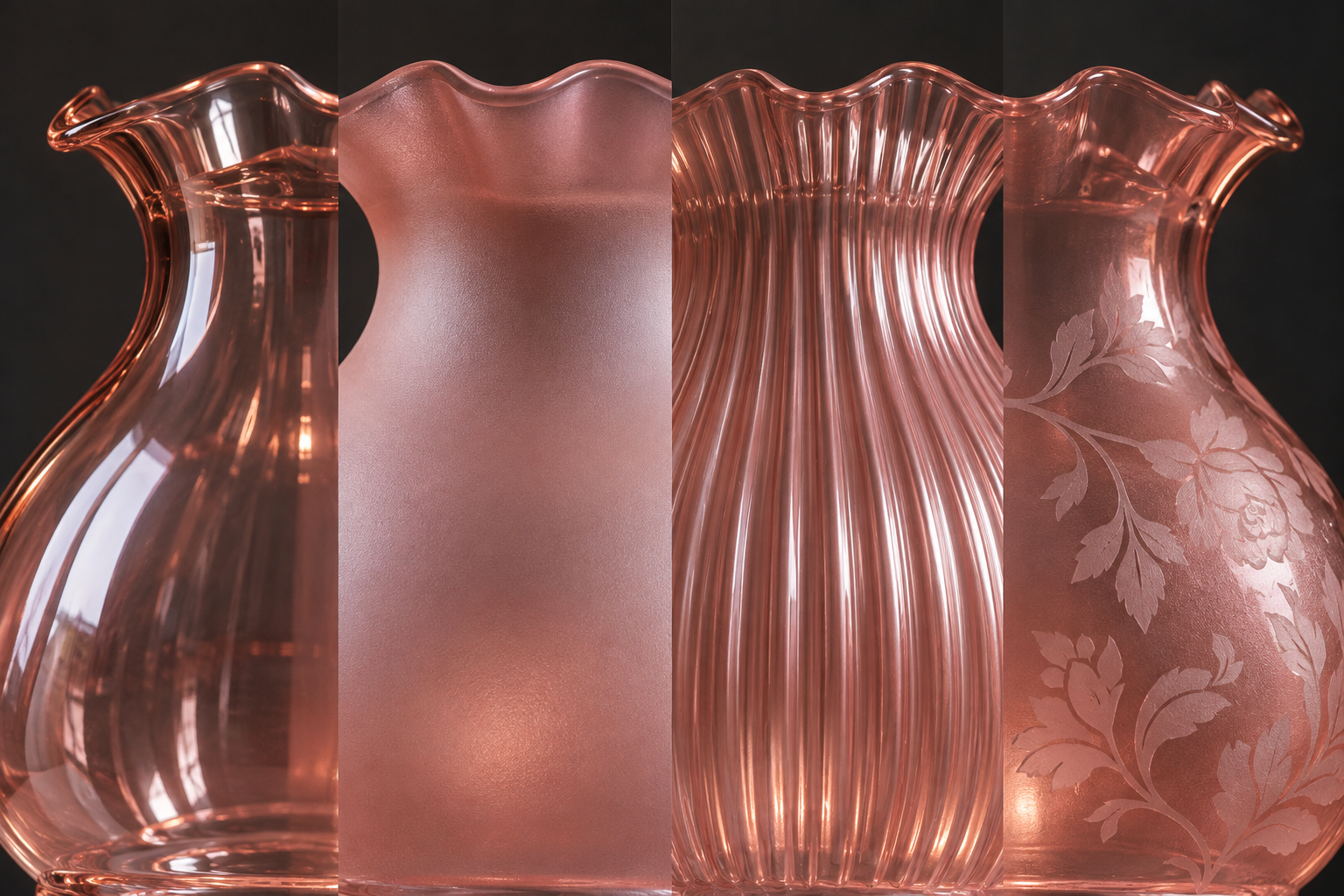
| Finish route | Visual result | Questions for the supplier |
|---|---|---|
| Rose-colored body glass | Color remains part of the glass wall | How does thickness affect the color and transmission? |
| Clear glass with surface color | Strong reflection or metallic look may appear | Is the finish continuous, masked or limited to selected areas? |
| Opalescent rose | Soft, milky diffusion with reduced transparency | How much white or haze is acceptable in the approved sample? |
| Satin or frosted rose | Lower glare and softer highlights | What cleaning method and abrasion limit should be used? |
| Ribbed or pressed rose glass | Pattern adds highlights and darker valleys | Is the color even across the mold pattern and rim? |
| Painted or printed detail | Local motifs or borders can be added | Will heat, handling and cleaning affect the decorative area? |
The Corning Museum's Amberina definition is a useful reminder that some historical color changes were created by composition and controlled reheating. A current OEM supplier should still state its own production route instead of borrowing a historic name as a guarantee.
What historical glass can teach a buyer
Historical examples are useful for vocabulary and appearance, not for assuming that a modern component has the same chemistry. The Met rose bowl is described as rose-colored satin glass and blown cranberry glass. Corning's collection also records a hand lamp with a mold-blown ruby glass shade or chimney. These records show that warm red and rose families have appeared in different forms, techniques and applications.
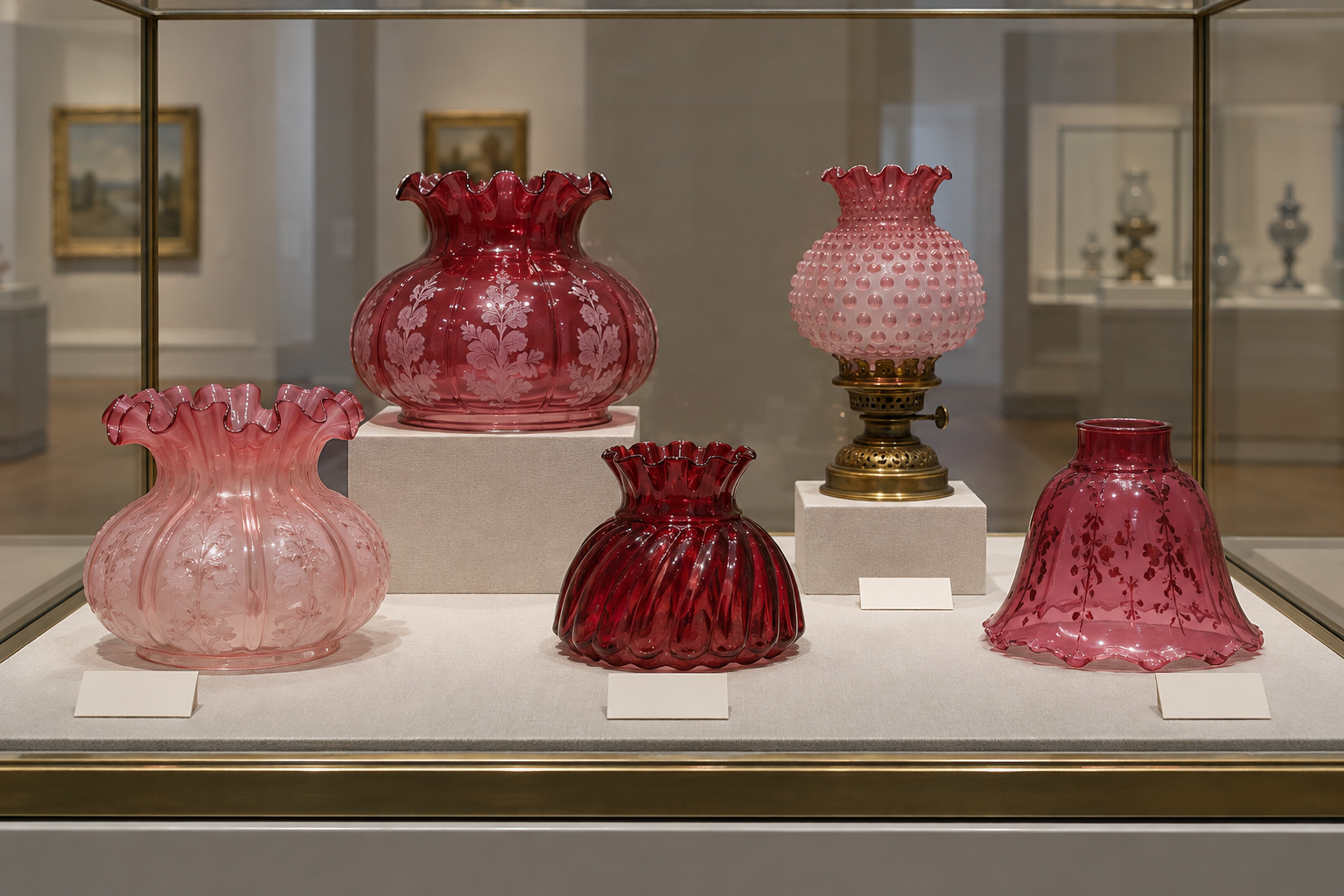
For a buyer, the practical lesson is to separate three questions:
- What does the shade look like?
- How was the color or finish produced?
- Is the complete fixture suitable for the intended lamp, temperature and use?
The first question belongs in the color brief. The second belongs in the supplier process record. The third belongs in fixture validation. A historic label cannot answer all three.
OEM color approval for a rose glass shade
An OEM brief should give the supplier enough information to make a controlled sample. "Rose glass" alone is not enough. Add a target range, a reference sample or color board, the lighting condition and the parts of the shade that must stay clear.
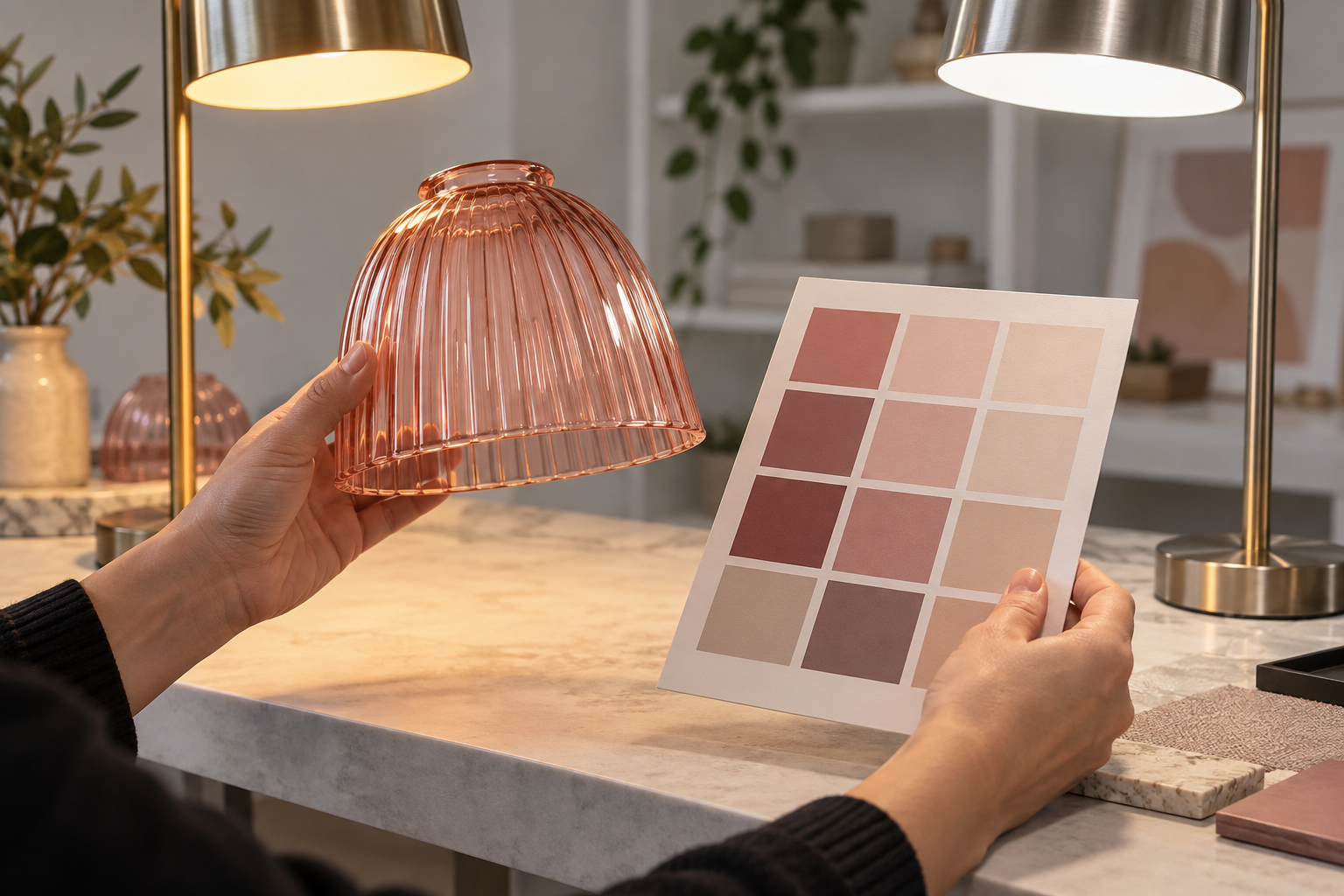
| RFQ field | Example of a useful instruction |
|---|---|
| Color target | Soft rose with a warm pink body, not purple and not opaque white |
| Base glass | Clear or opalescent glass, stated by the supplier |
| Transmission | Diffused glow with no exposed LED hotspot from the normal viewing angle |
| Surface | Smooth, satin, ribbed or decorated, with the finish location shown |
| Profile | Bell, globe, dome, cylinder or supplied drawing |
| Fitter | Opening, neck, gallery, thread or ring dimensions |
| Lighting condition | LED color temperature, wattage or fixture reference |
| Variation | Acceptable shift in hue, saturation, gradient and surface coverage |
| Sample plan | First article, approval sample, retained master and batch comparison |
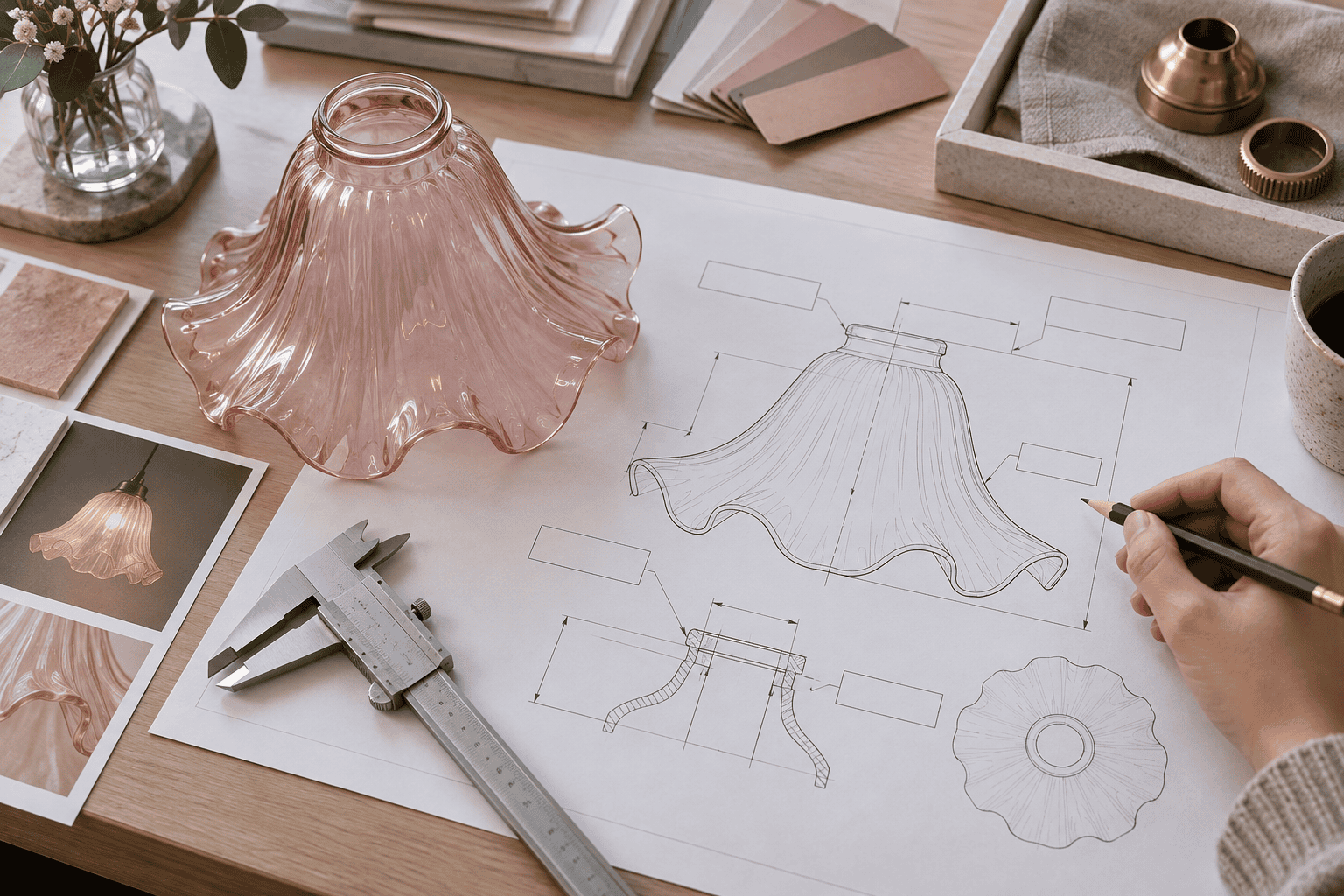
If the project has more than one shade in the same room, ask how the supplier will control batch consistency. A single beautiful sample does not prove that a production run will match it.
Sample approval and inspection
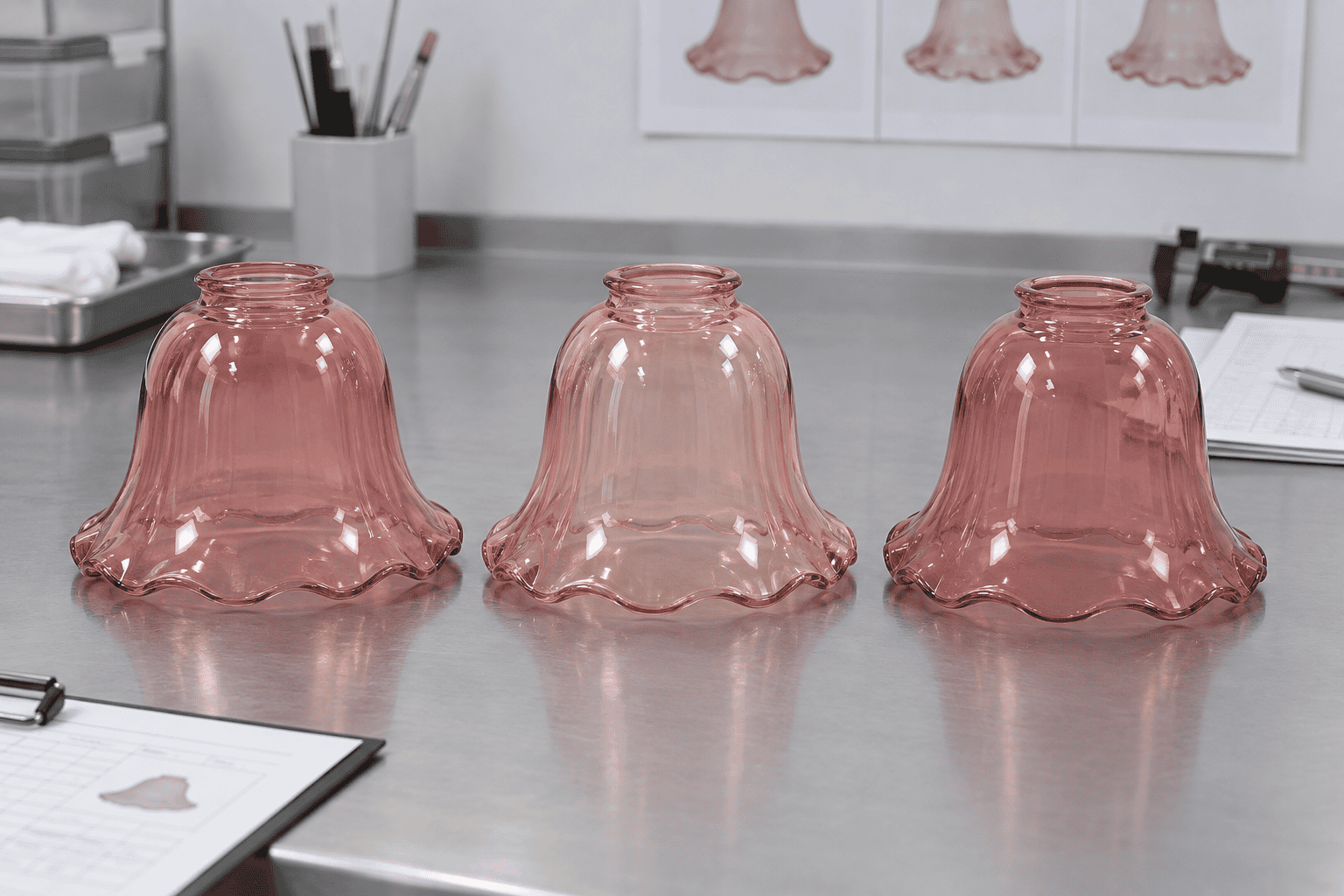
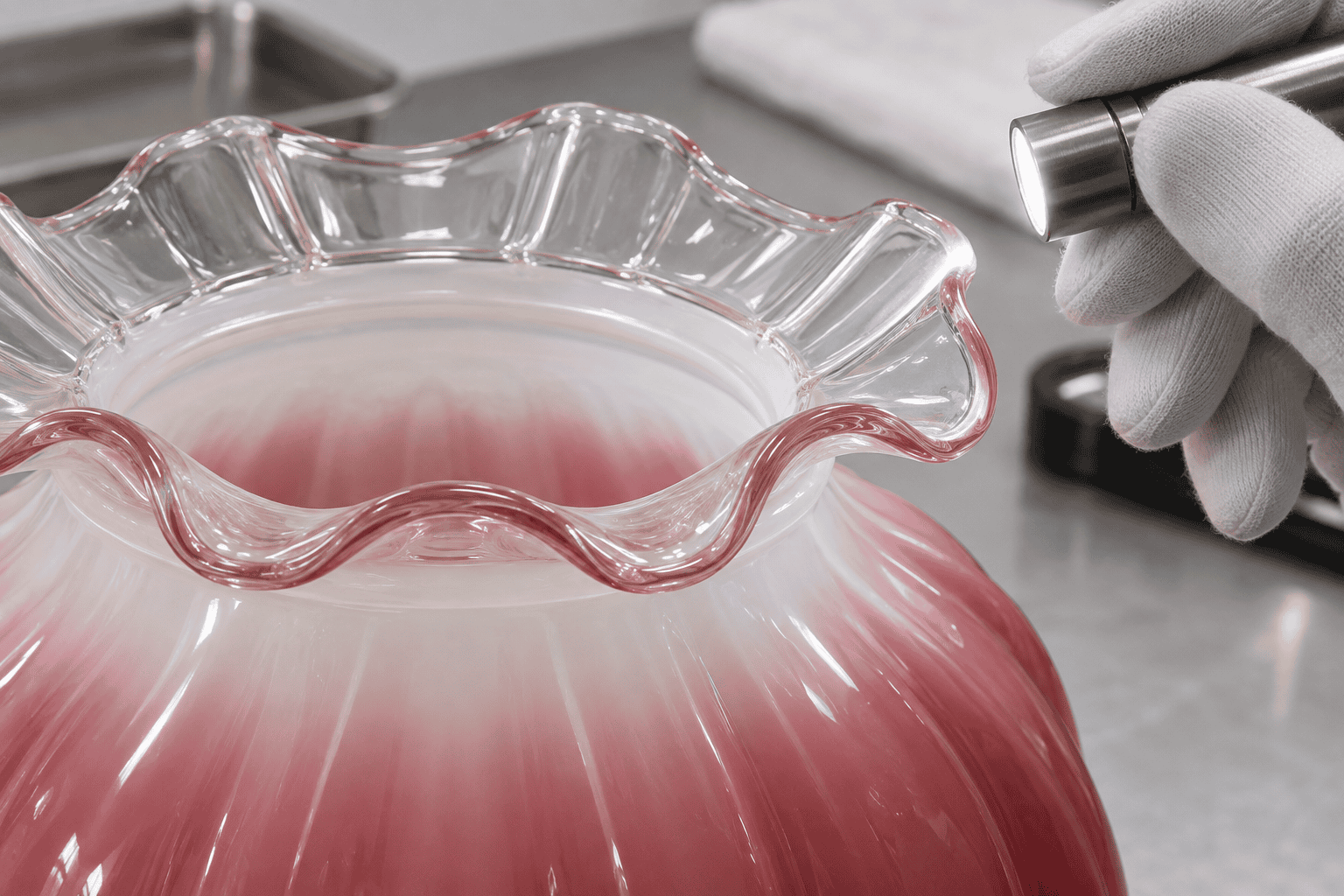
The approval sample should be checked under the same conditions used for the final application. If the shade will be installed over a restaurant counter, inspect it above a similar surface. If it will be used in a sconce, inspect the rim at eye level. If it will be sold as a replacement, compare the fitter and seating position with the original fixture.
| Check | Pass condition to define |
|---|---|
| Color | Within the approved hue, saturation and gradient range |
| Transparency | No unexpected cloudy patch, bare area or excessive hotspot |
| Surface | Finish is even and free from obvious scratches, pinholes or residue |
| Profile | Height, diameter and silhouette match the drawing or master |
| Fitter | Opening is round, stable and seats correctly on the fixture |
| Rim | No sharp edge, crack, chip or unstable decorative boundary |
| Batch | Multiple pieces show a defined and acceptable variation |
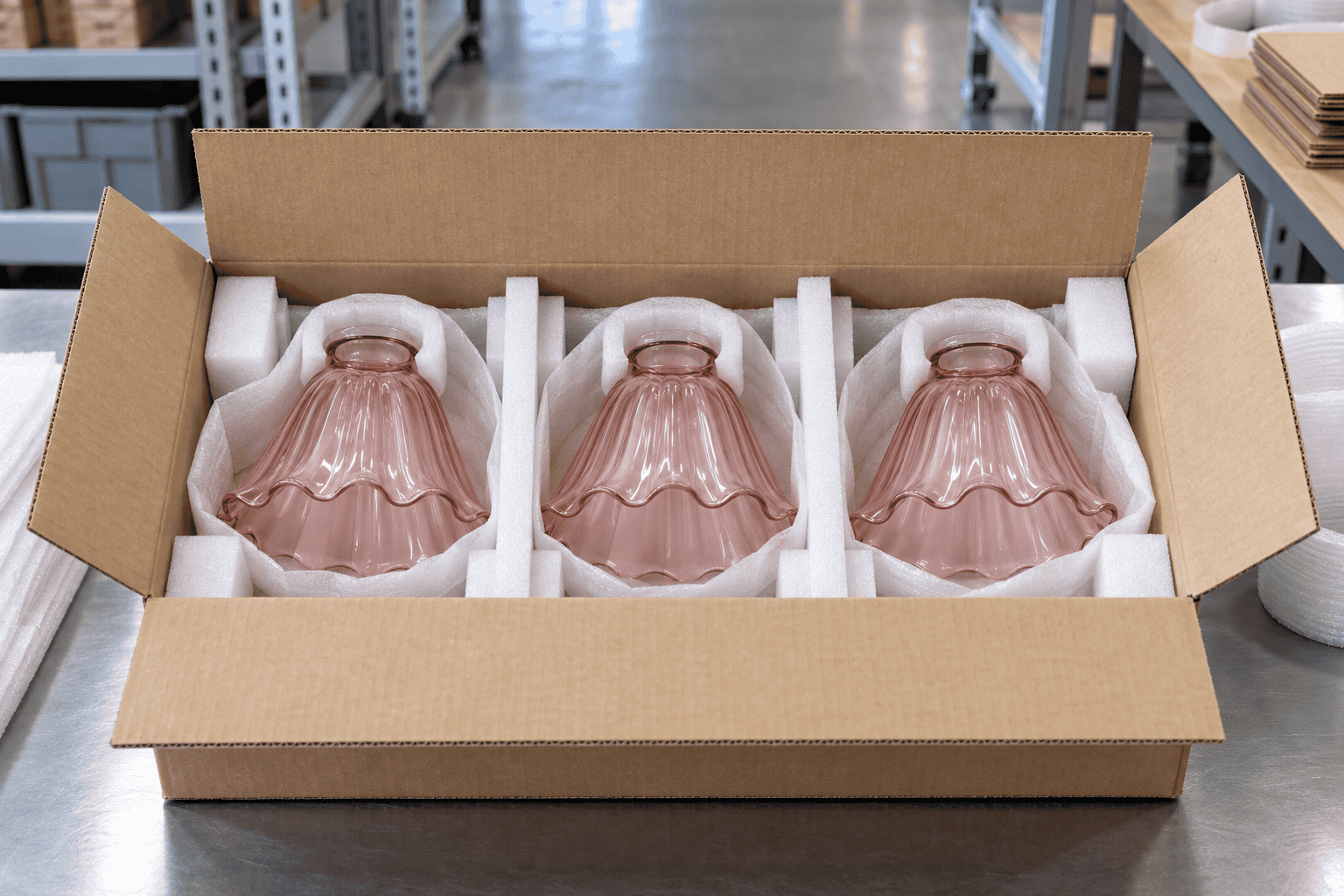
| Packaging | Rims and decorated surfaces are protected for shipment and handling |
The glass lamp shade quality inspection checklist is a useful starting point for turning those checks into a purchase record. The final acceptance criteria still need to match the project and the actual sample.
Where rose glass lamp shades work well
Rose glass can support a warm decorative direction, but the right application depends on light output, glare and how close the viewer will be to the shade.
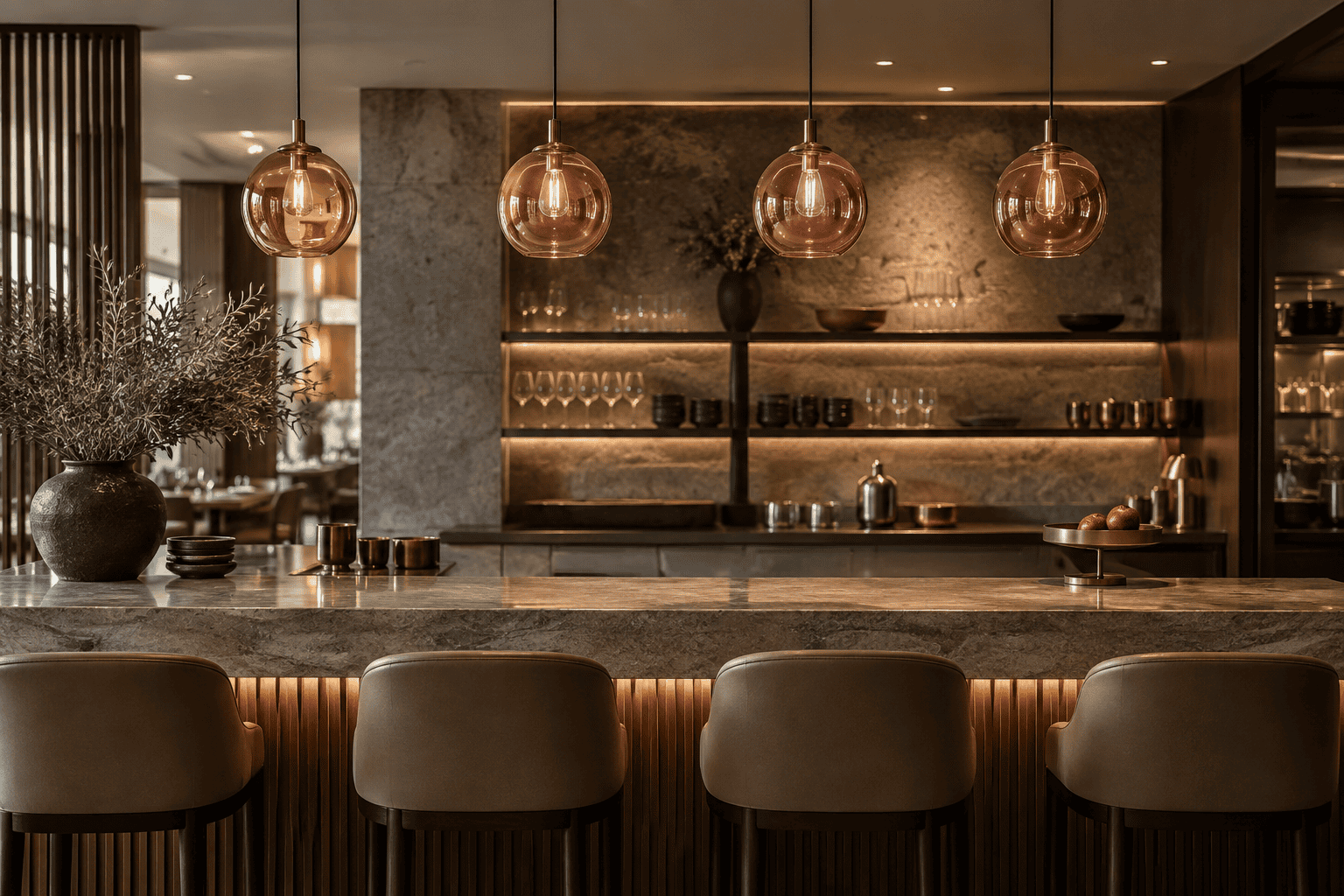
Common applications include:
- boutique hospitality counters where a warm accent is wanted;
- residential pendants where the shade is part of the room palette;
- table lamps where the glass color is visible when the fixture is off;
- wall sconces where the rim and surface are seen from close range;
- retail or display lighting where the color must be balanced against products;
- replacement programs that need a repeatable profile and fitter.
For restaurant work, compare the brief with JX's glass color guide for restaurant lighting, then confirm the actual light source and surface colors in the installation.
Buyer questions
Is rose glass real glass?
Usually, yes. Rose is a visible color description, not a plastic substitute. Confirm the material, wall thickness, edge treatment and surface finish on the product specification or sample record.
Is rose glass the same as cranberry or ruby glass?
Not necessarily. The terms can overlap in appearance, but cranberry and ruby may refer to historical glass families or deeper red color systems. A supplier should identify the actual glass and finish route instead of relying on the name alone.
Does rose glass change color under different lights?
It can appear to change because the light source, viewing angle, background and glass thickness change. Approve a sample under the light sources used in the finished fixture.
Is pink opalescent glass the same as rose glass?
No. Pink opalescent glass usually emphasizes a milky or diffused optical effect. Rose glass may be transparent, satin, ribbed or decorated. Compare transmission and surface finish before choosing between them.
Can I use a rose glass lamp shade as a replacement?
Check the opening, support ring, overall height, widest diameter, retention hardware, bulb clearance and rim condition before ordering. A matching color cannot compensate for an incorrect mounting interface.
What should a manufacturer quote for an OEM rose glass shade?
Send the profile, dimensions, fitter, base glass, color target, transmission, finish route, acceptable variation, lighting condition, sample quantity, production quantity, packaging and inspection point. A drawing or physical reference makes the quote more reliable.
Specify the rose finish before you request a quote
Rose glass works best when the color name is treated as the beginning of the brief. Define how the shade should look unlit and lit, decide whether the body is transparent or opalescent, record the fitter, and approve a retained sample under the real light source. For a production project, use JX's custom glass lamp shade manufacturer page and custom lampshade RFQ builder to send dimensions, photos and the finish requirements together.