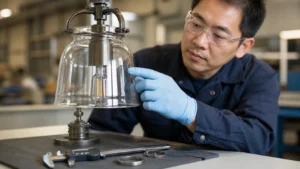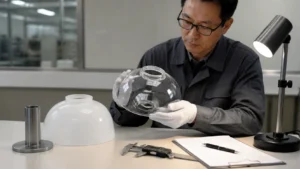
Choose a glass lamp shade edge finish from the rim's job, not from a finish name alone. A concealed rim may only need controlled seaming and a reliable fit. A rim that seats on hardware often needs a ground, dimensionally controlled contact face. A visible lower edge may justify mechanical polishing or fire polishing for a cleaner appearance. The glass type, forming route, final dimensions, and inspection method still have to be confirmed with the manufacturer.
The edge is a small part of a lamp shade, but it can decide whether the shade sits flat, rattles in a holder, chips during assembly, or looks unfinished when the light is on. Requests such as "make the edge smooth" leave too much open to interpretation. A supplier still has to decide whether smooth means lightly seamed, ground matte, mechanically polished, or softened by heat.
The terms below tie the edge finish to fit, appearance, and inspection. They also show what can change during processing and what belongs in a drawing or sample approval record.
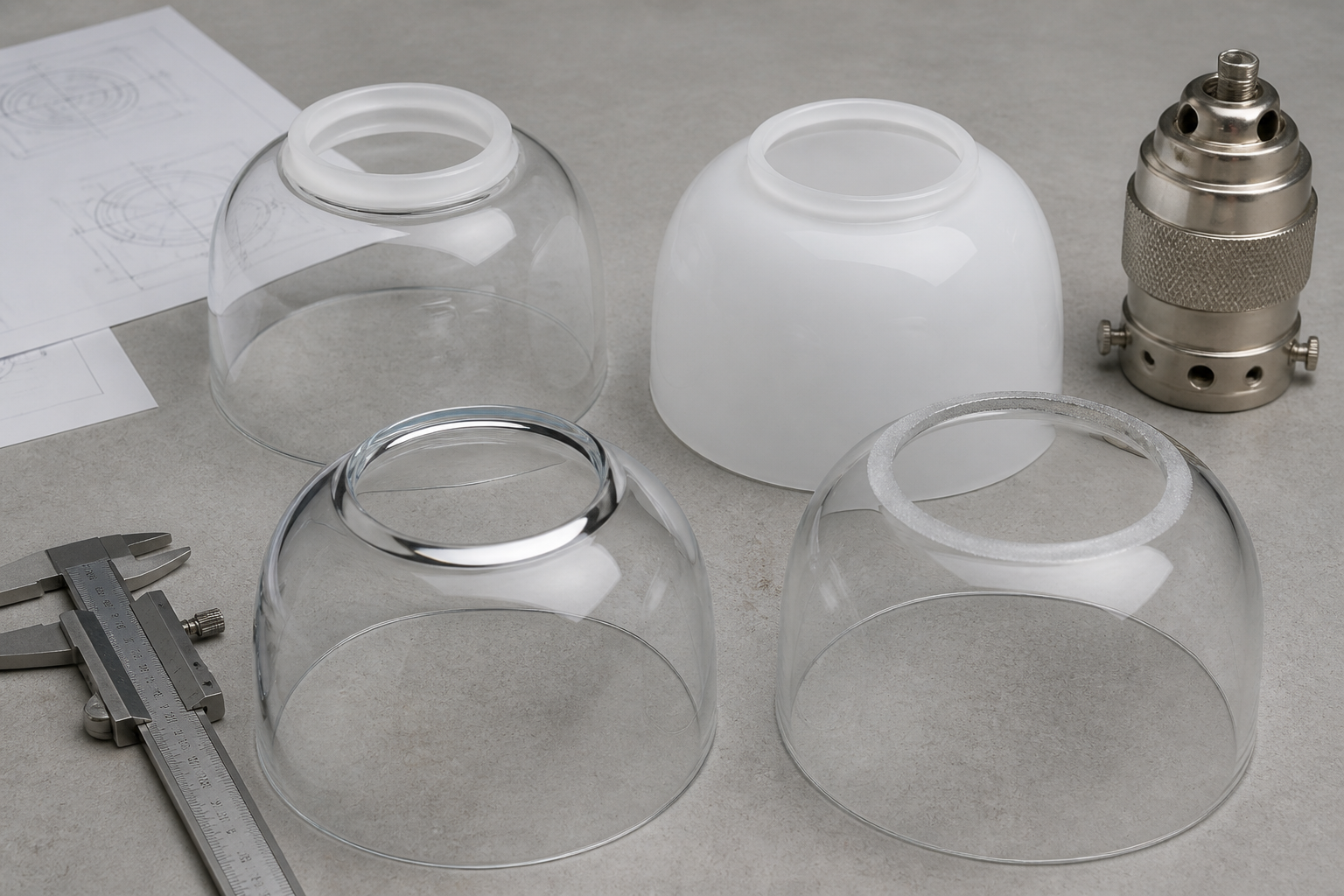
Start with the job the rim has to do
Before naming a process, identify the surfaces that matter. A single shade can have more than one edge condition.
| Rim condition | Main requirement | What the buyer should define |
|---|---|---|
| Hidden inside a holder | Safe handling and reliable retention | Opening size, wall condition, holder contact, allowed visual roughness |
| Flat contact rim | Stable seating and load transfer | Contact face, flatness, inside or outside diameter, edge break |
| Exposed decorative rim | Appearance and touch | Gloss or matte target, profile, allowed waviness, chip and polish-mark rules |
| Threaded or stepped neck | Assembly and dimensional control | Thread or step geometry, gauge method, mating hardware, no-go conditions |
| Clip or screw interface | Local strength and clearance | Contact points, edge distance, hole condition, assembly force, sample test |
A hidden edge does not automatically deserve the cheapest finish. If it carries the shade on a narrow metal ring, its diameter and contact face may be more important than its gloss. The reverse is also true. A glossy exposed rim can look refined but still be wrong if the finish softens a dimension that controls the fit.
日本の lampshade fitting specification guide explains the hardware side of this interface. For edge finishing, the useful question is narrower: which glass surfaces touch, remain visible, or need to be measured after the final edge operation?
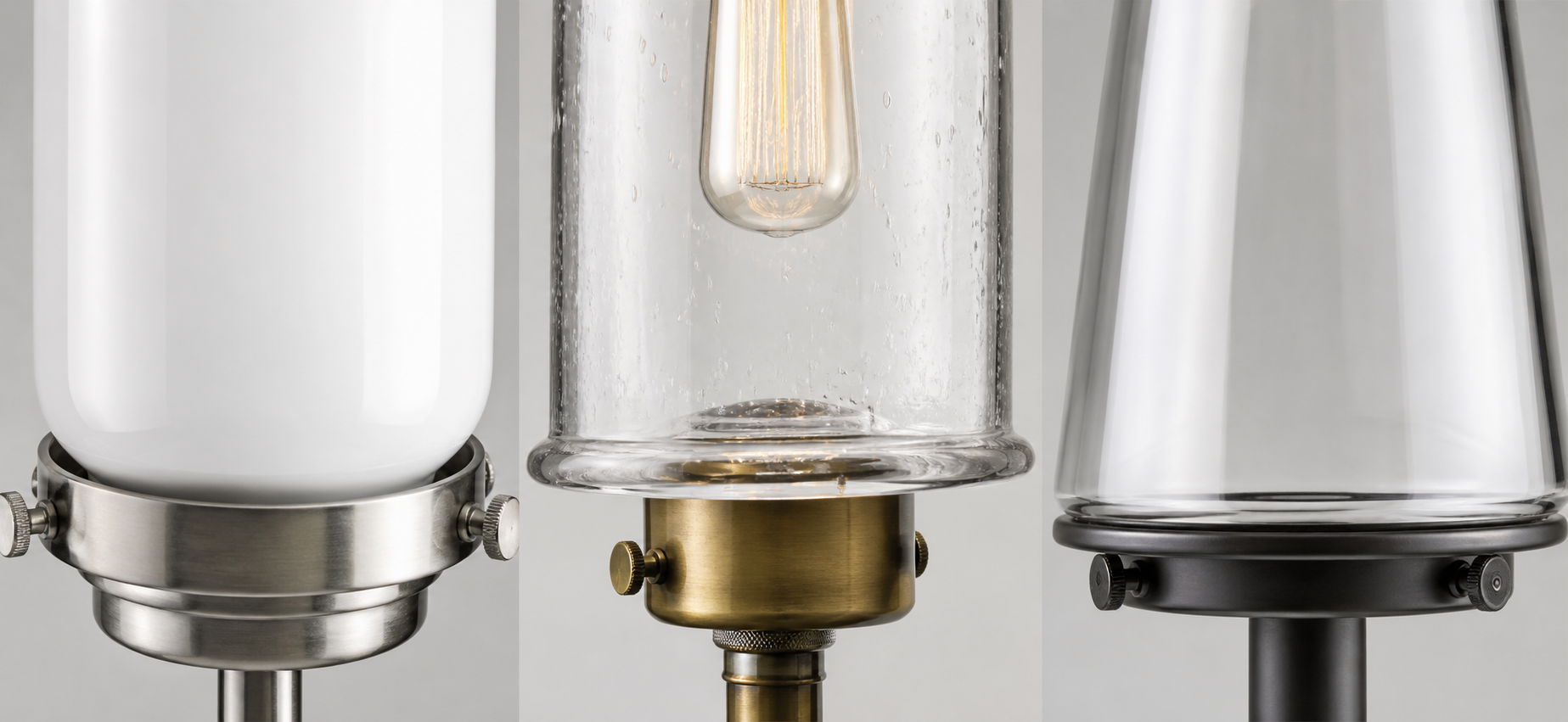
Compare the common glass edge finishes
Glass terminology changes between flat-glass fabricators, glassblowers, tubing suppliers, and lighting factories. Put a process description or an approved sample beside the name whenever the wording could be ambiguous.
日本の National Glass Association Engineering Standards Manual describes raw, seamed, ground, and polished edges for flat glass. That taxonomy is useful vocabulary, but it is not a lamp shade acceptance standard. Curved, blown, pressed, and tubular parts can require different tools and control points.
| 仕上げ | What it usually means | Good fit for | Main buyer check |
|---|---|---|---|
| Raw or as-cut | Edge immediately after a cutting operation | Intermediate work only, or a fully enclosed edge when specifically approved | Sharpness, chips, hidden condition, need for secondary work |
| Seamed or arrised | Sharp inner and outer margins are lightly ground; the central edge face may remain rough or matte | Concealed or framed rims with modest appearance demands | Complete edge break, no dangerous projections, opening size |
| Ground | Edge face is abrasively brought to size and made more regular; finish is normally matte | Fitter openings, contact faces, controlled height or diameter | Final dimension, flatness, squareness, chips, grind marks |
| Mechanically polished | A ground face receives finer polishing to create a clearer, glossier finish | Visible rims where a machined appearance is wanted | Gloss consistency, profile, edge breaks, optical variation |
| Fire-polished | Heat softens the surface and sharp margins of a compatible edge | Mouth-blown or tubular forms where a rounded glossy rim suits the geometry | Dimensional change, rounding, waviness, residual process marks |
These categories describe different outcomes. "Polished" should not be used as shorthand for fire-polished. Mechanical polishing removes material with abrasives and polishing tools. Fire polishing changes the surface with heat. Either route can produce a glossy appearance, but the edge profile and dimensional behavior are not the same.
Raw or cold-cut edges are usually a process stage
"Cold cut" may refer to a saw cut, wheel cut, scored break, or another mechanical separation method. It does not tell the buyer whether the inner and outer margins were seamed afterward. It also does not define the condition of the edge face.
A raw edge can carry chips, shelling, sharp points, and subsurface damage from cutting. For a finished lamp shade, especially one handled during installation, the drawing should state the required secondary work. If the edge will be completely enclosed by a holder, an approved seamed condition may be enough. If the edge remains visible or seats against hardware, more control is usually needed.
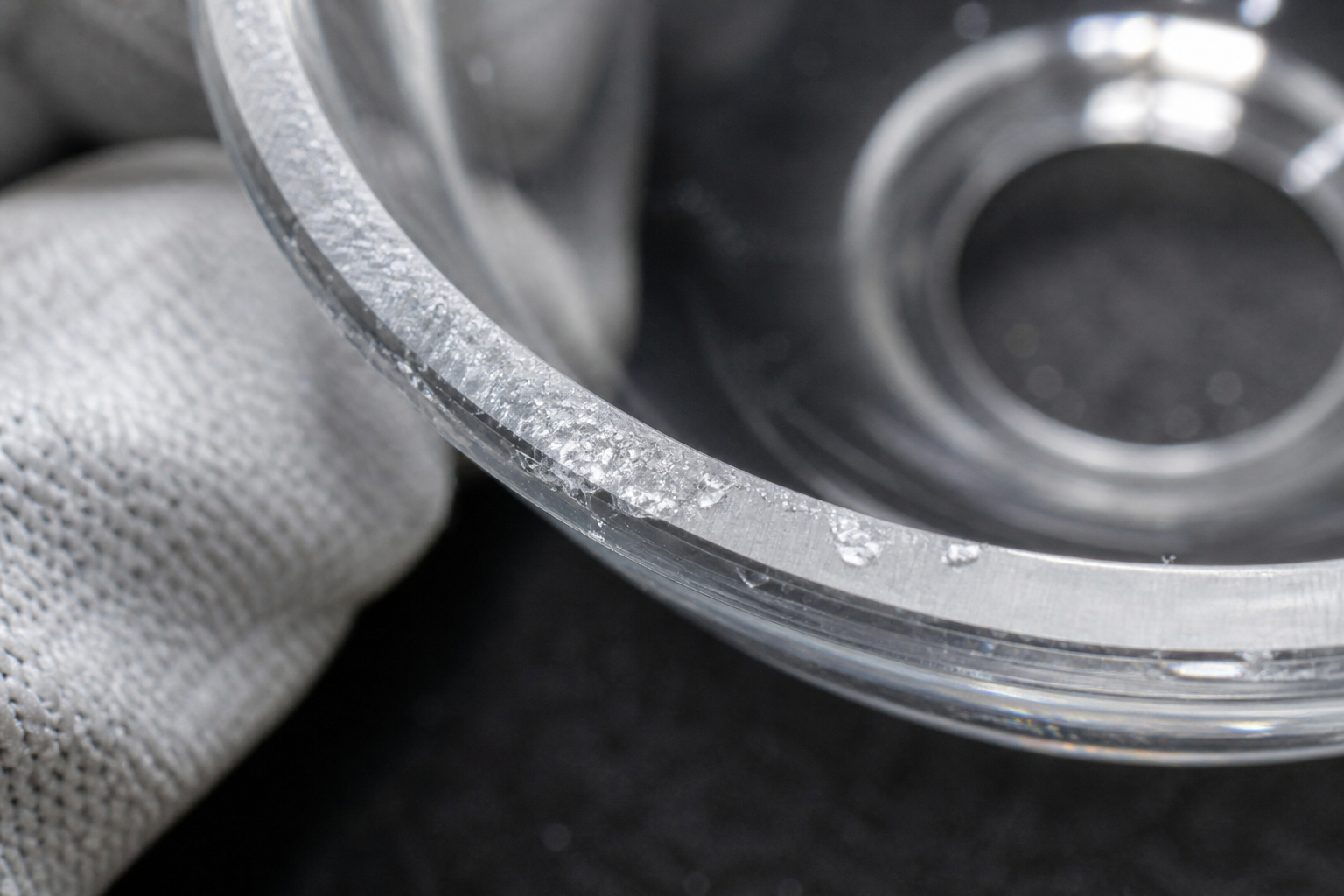
Seamed edges remove the dangerous margins
Seaming, also called arrising in some glass sectors, lightly grinds the sharp margins. The face between those margins can remain visibly rough. This is a practical choice when the holder hides the edge and the drawing does not require an optically clear finish.
Do not judge a seamed edge only by running a bare finger over it. Inspect it under good light, use protective handling practices, and define whether chips, unprocessed segments, or sharp projections are allowed. A sample photo should show both the edge face and the inner and outer edge breaks.
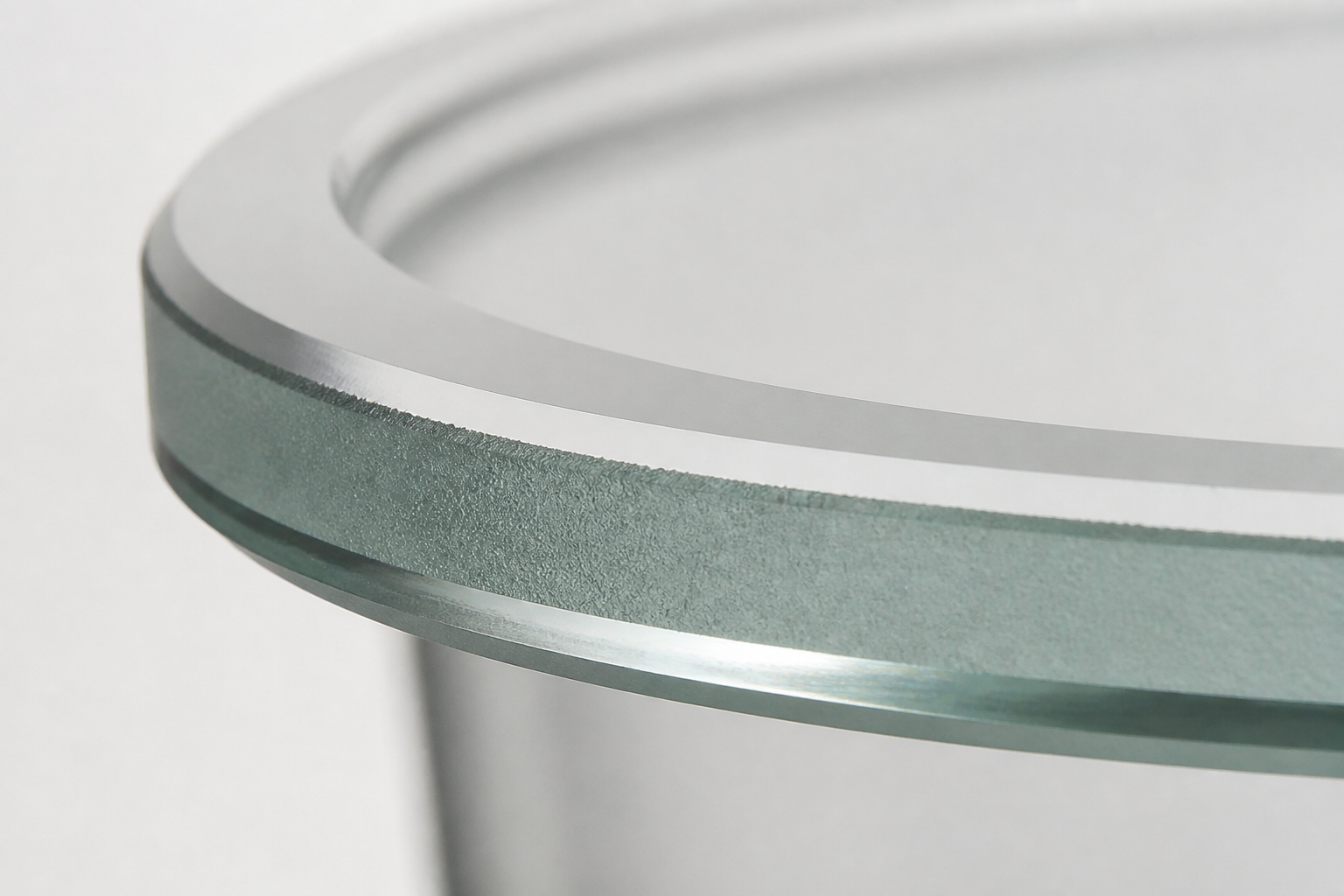
Ground edges control size and contact
Grinding is useful when the rim has to meet a diameter, height, flatness, or squareness requirement after the shade is formed. The edge is normally matte because the abrasive texture remains visible. That appearance may be acceptable inside a metal holder even when a glossy finish would be preferred on an exposed rim.
For a fitter opening, state whether the controlled dimension is the inside diameter, outside diameter, contact diameter, or a gauge fit. A ground edge can still fail the assembly if the drawing measures the wrong surface.
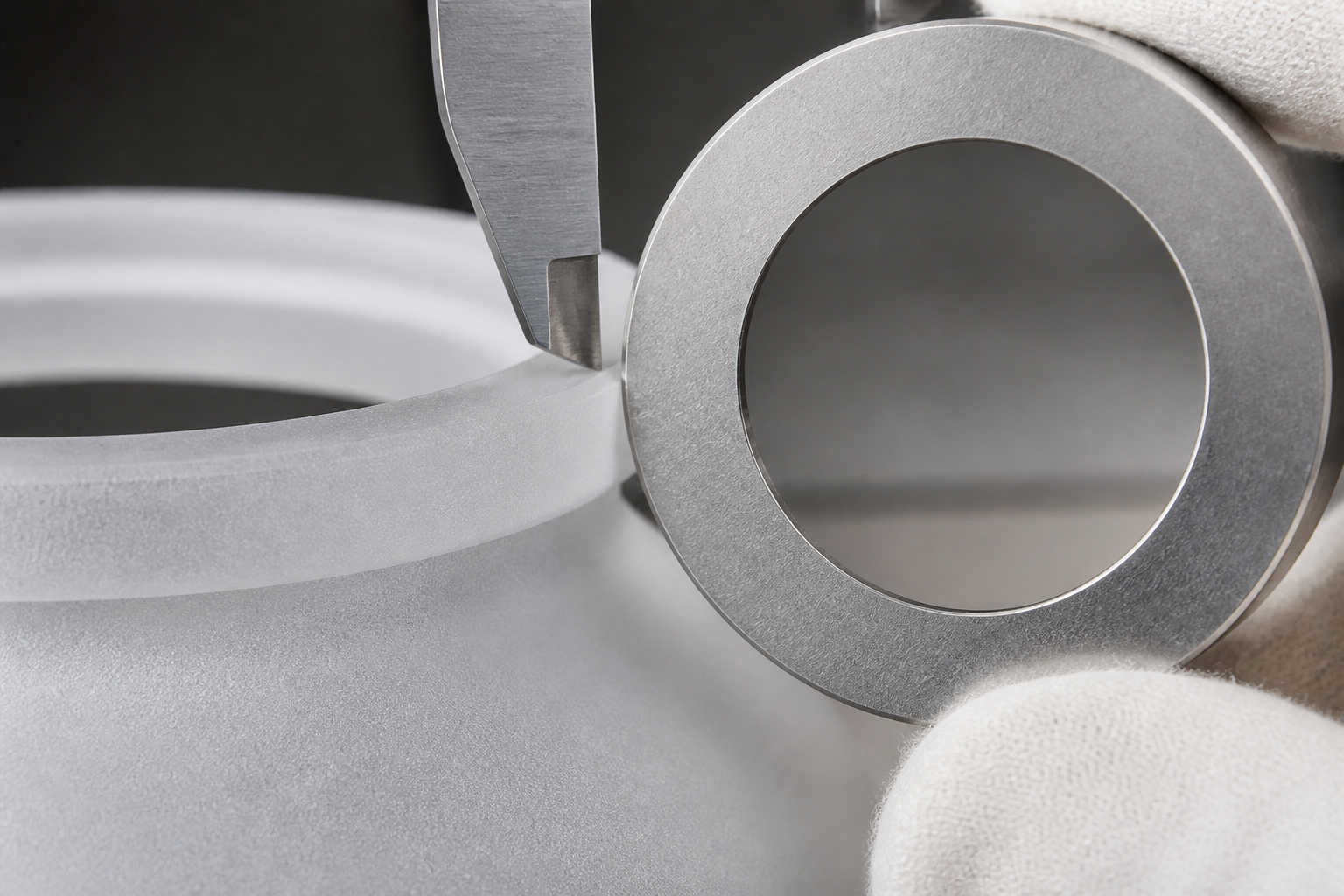
Mechanical polishing is for a controlled glossy face
Mechanical polishing starts with a ground edge and uses finer tools or compounds to reduce the visible abrasive texture. It can create a clearer edge face and a more deliberate appearance. It is often easier to specify when a flat or profiled exposed edge must remain dimensionally controlled.
The polish does not erase the need for small edge breaks. A sharp polished corner can still be vulnerable during handling. The drawing should show whether the rim needs a flat polished face, a chamfer, a small radius, or another profile that the supplier confirms it can produce.
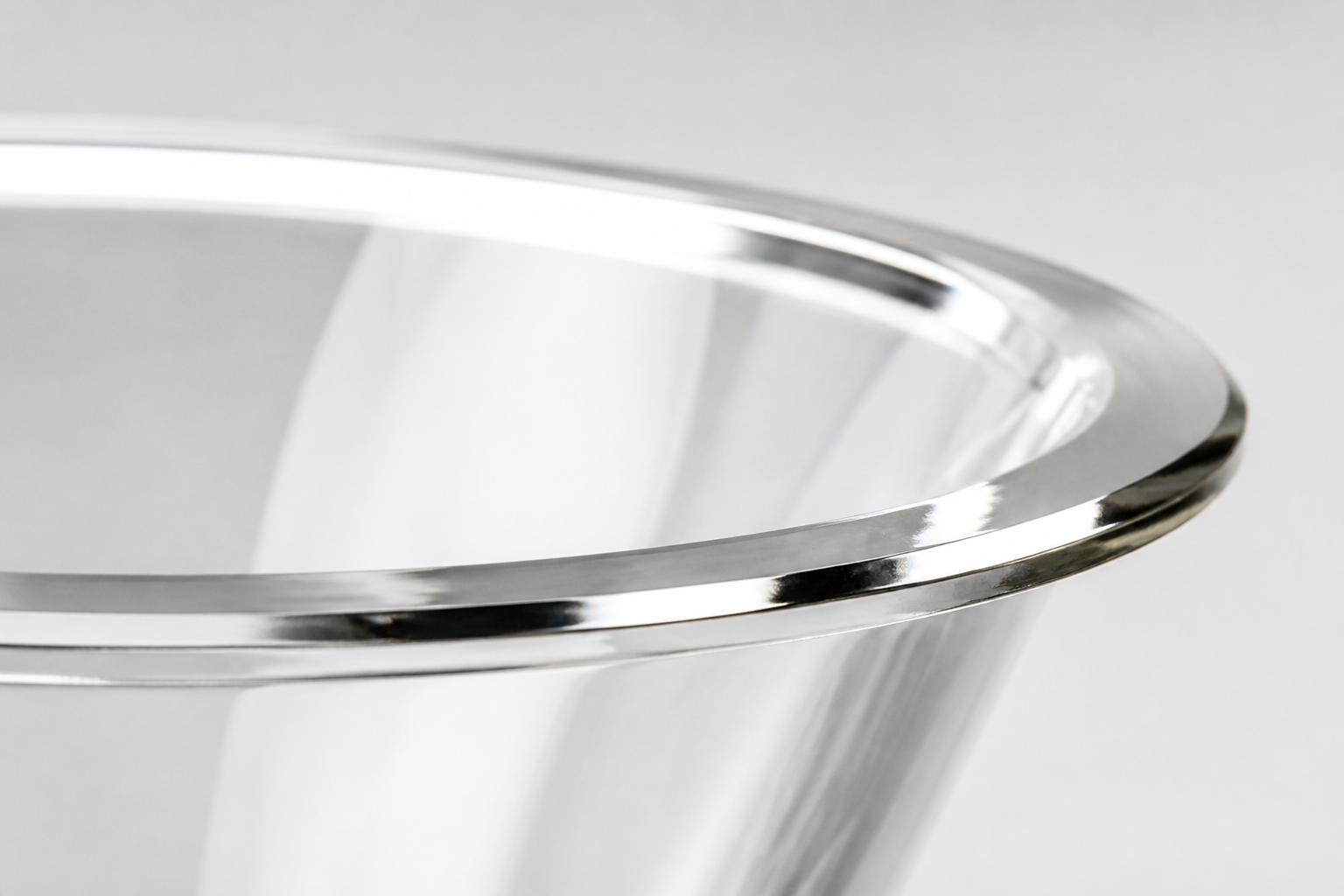
Fire polishing changes the edge with heat
Fire polishing, also called flame polishing, reheats the surface until it softens enough to smooth sharp features and create a rounded glossy appearance. It is common in some mouth-blown and tubular glass work. It is not the same as annealing, tempering, or a mechanical polish.
Heat can soften corners, round a cut face, and move the final dimension. The result depends on glass composition, wall thickness, rim geometry, heat input, and process control. A fire-polished rim should therefore be approved after the operation, not measured only before it.
日本の Pegasus Glass end-finish guide shows saw-cut, ground, chamfered, thermal-cut, and fire-polished options for glass tubing. It is useful evidence for tubular end terminology. It does not prove that every lamp shade shape or glass family can use the same sequence.

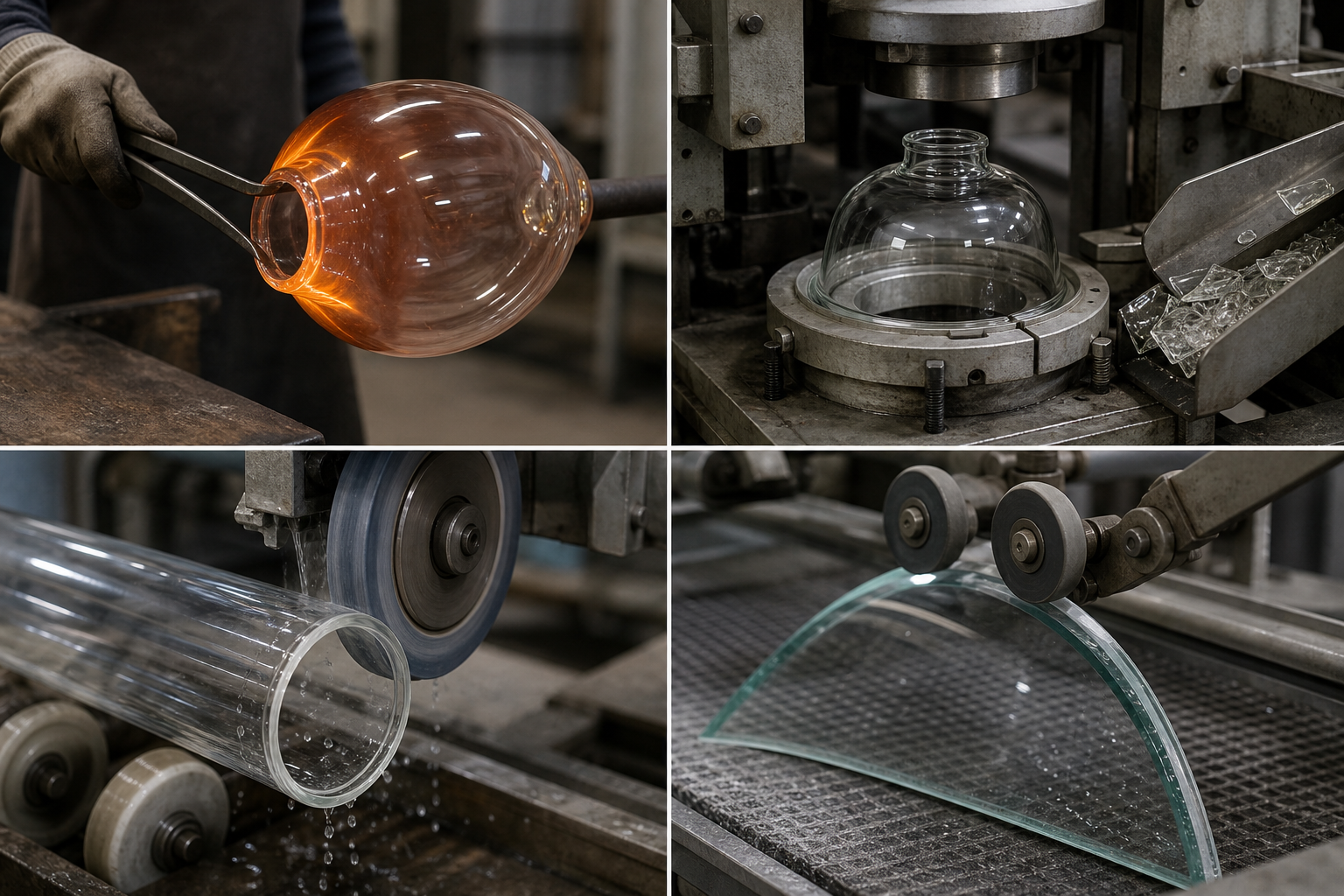
Match the edgework to the manufacturing route
The production sequence changes with the shade type, even when two suppliers use the same finish name. Ask when the final edge is created and which dimensions are checked afterward.
Mouth-blown shades
A mouth-blown shade can be separated from excess glass after forming and annealing, then cut or ground to its final opening. Depending on the design, the rim may be ground, mechanically polished, or reheated for a fire-polished appearance. The choice affects the edge profile and the amount of dimensional correction available.
日本の mouth-blown glass lamp shade page shows the wider production context. For an RFQ, the buyer still needs to identify whether the rim is hidden by a holder, exposed below eye level, or used as a precision contact surface.
Machine-pressed shades
Pressed parts can have mold seams, flash, or excess material around the opening. Edge finishing may remove flash, correct the opening, create a contact face, or improve appearance. If the part will be tempered, the factory must confirm the sequence and what edgework can be done before heat treatment.
日本の NGA heat-treated flat-glass guidance discusses seamed, ground, and polished edges before heat treatment. Its scope is architectural flat glass, so use it as a process-sequence reference rather than a universal rule for pressed lamp shades. The supplier must define the applicable process for the actual part.
Borosilicate tubing and lampworked forms
Tubular borosilicate parts may begin with a saw-cut or thermal-cut end. Chamfering, grinding, or fire polishing can follow, depending on fit and finish requirements. A fire-polished tube end may look smooth while having a different squareness or length result from a precision ground face.
For a mating end or a threaded assembly, ask which surface controls length and perpendicularity. For an open decorative end, define the desired rounding and visual reference. The site's borosilicate glass lamp shade guide covers the material choice; the edge specification still belongs in the part drawing.
Heat-formed sheet and curved panels
A slumped or curved panel may need its perimeter cut, seamed, ground, or polished after forming. Spring-back, mold contact, and perimeter geometry can affect the final fit. If the panel slides into a channel, the controlled edge may be hidden but still dimensionally critical.
Put the edge requirement in the drawing
Avoid a one-line note that says "all edges smooth." A useful edge detail identifies the part, surface, process intent, dimension, and acceptance method.
Include these fields:
- Mark each rim or edge with a unique callout.
- State whether it is hidden, exposed, or in contact with hardware.
- Name the requested condition, such as seamed, flat ground, flat polished, chamfered, or fire-polished.
- Draw the edge profile, including any radius or chamfer that affects fit or appearance.
- Identify the controlled diameter, height, contact face, or gauge condition after final finishing.
- State whether waviness, grind haze, polishing marks, shelling, chips, or local variation will be judged visually or dimensionally.
- Reference the actual metal holder, retaining ring, clip, or thread when fit depends on hardware.
- Give the sample or drawing revision that controls approval.
If the supplier uses different terminology, resolve that before sampling. A marked photo, section sketch, and physical hardware can make the intent clearer than a process name by itself.
Inspect the finished rim after the final operation
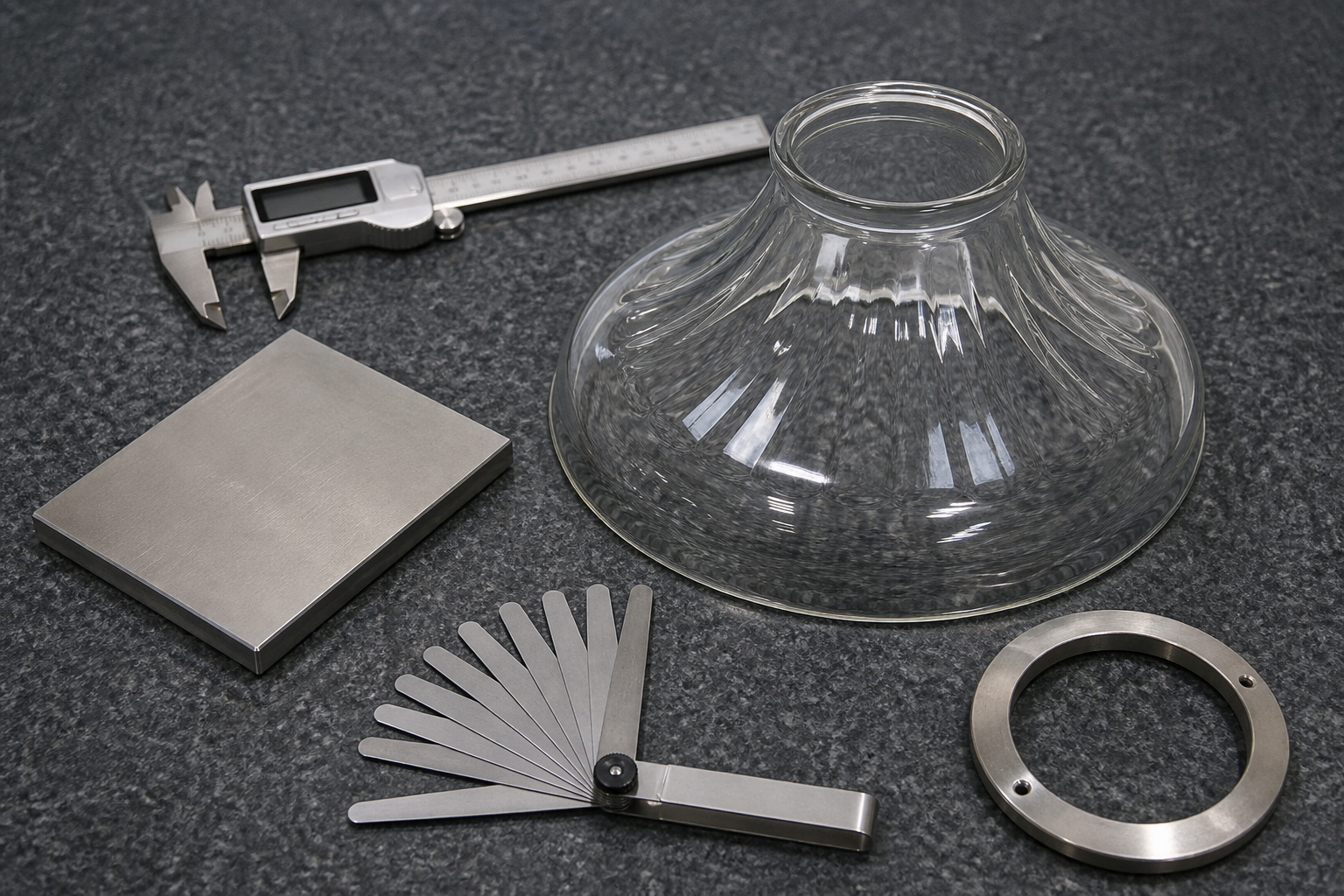
Edge inspection should reproduce the way the shade will be assembled and seen. A bright bench photo is useful, but it is not enough by itself.
| Check | Practical method | Approval question |
|---|---|---|
| Opening size | Calipers, plug gauge, ring gauge, or mating hardware | Which surface and temperature condition control the result? |
| Rim flatness | Surface plate, controlled fixture, or agreed gap check | Does the shade seat without rocking or concentrated contact? |
| Squareness or orientation | Fixture, angle reference, or controlled assembly | Does the rim hold the shade in the intended position? |
| Edge profile | Profile view, comparator, radius gauge, or approved sample | Are rounding and chamfers intentional and repeatable? |
| Chips and shelling | Raking light, contrasting background, magnification when agreed | Which surfaces are critical, and what size or location is unacceptable? |
| Polish appearance | Reflected and transmitted light against an approved master | Are haze, grind lines, waves, and local gloss variation acceptable? |
| Hardware fit | Assembly with production-representative holder and retention parts | Can the shade be installed and retained without forced contact? |
The drawing should not invent a universal chip limit. A small chip hidden inside a generous holder and the same chip on an exposed polished rim create different risks and visual outcomes. Define critical zones and approve limits with the manufacturer.
The technical progression from cut to seamed, ground, and polished edges is also described in Delft University of Technology's The Nature of Glass. That source explains general glass behavior. The lamp shade drawing still needs project-specific geometry, handling, and appearance criteria.

Review the sample with the real hardware
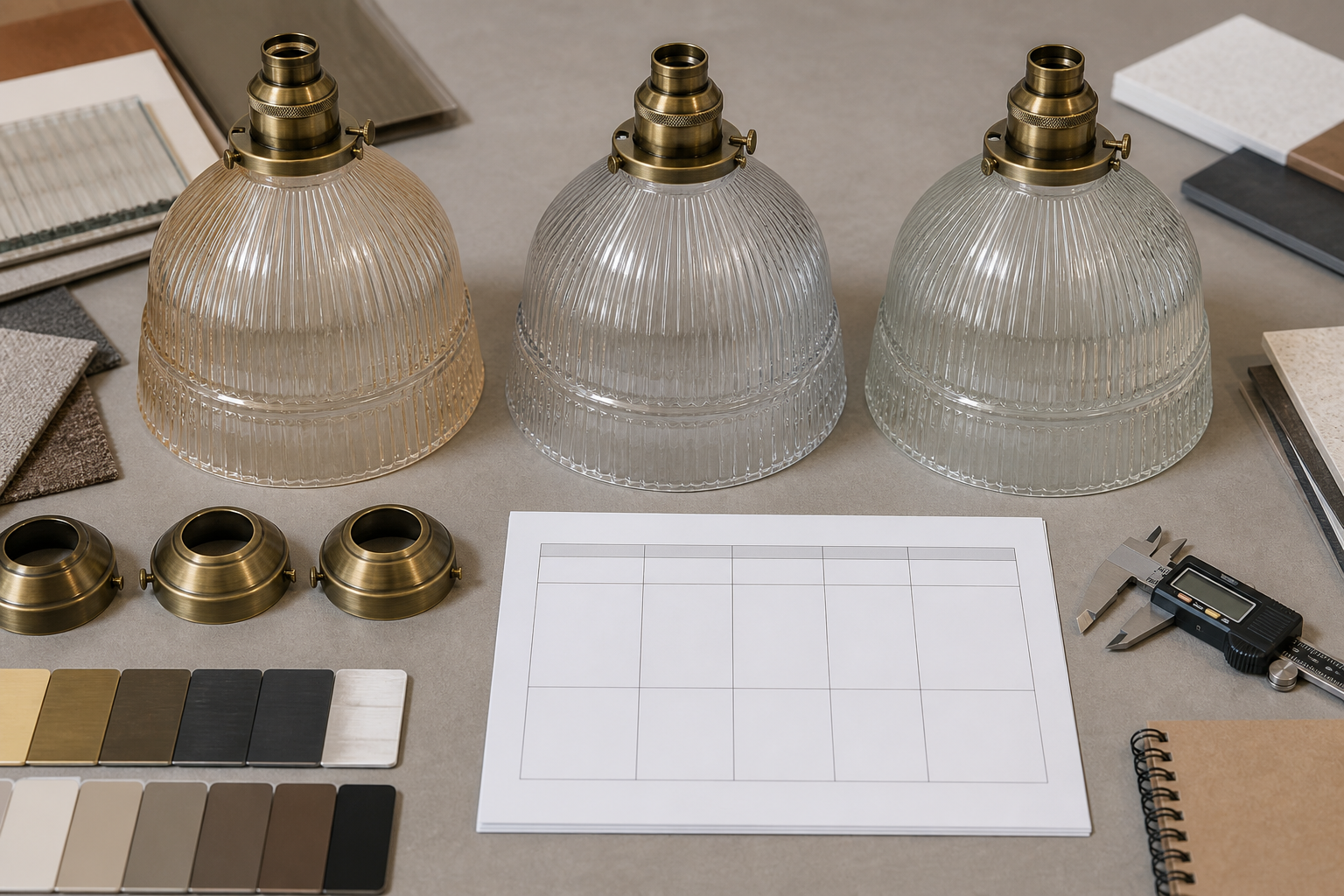
A rim sample should be reviewed with the holder, ring, clips, gasket, screws, or threaded part that will be used in production. A nominal opening can pass a caliper check and still seat poorly because the contact face, wall taper, or local waviness is wrong.
During approval:
- Confirm the part and drawing revision.
- Measure the final edge after all grinding, polishing, heat work, coating, and cleaning steps that can affect it.
- Assemble the shade with production-representative hardware.
- Inspect the exposed rim under the agreed viewing condition.
- Photograph accepted and rejected examples with a scale or marked location.
- Record whether the sample controls geometry, appearance, or both.
Do not use one attractive sample as a substitute for measurable acceptance points. Hand-formed glass can retain controlled variation, but the supplier and buyer still need to agree where variation is harmless and where it changes fit.
Common edge-specification mistakes
Calling every glossy edge fire-polished
A glossy result may come from mechanical polishing or heat. Ask which process created it and what profile should remain. The distinction matters when the rim dimension, flatness, or corner shape controls the assembly.
Choosing appearance before fit
An exposed polished rim can be visually important, but the holder interface comes first. Separate the visible edge from the contact surface if the design permits different treatments.
Measuring before final finishing
Grinding removes material. Fire polishing can round and move the edge. Coatings or decorative treatments may also change the way a gauge contacts the part. Put the final inspection after the last relevant operation.
Approving the shade without production hardware
Calipers cannot reproduce a spring clip, retaining ring, gasket, or threaded holder. Supply the mating component or an approved gauge and define how the assembly is judged.
Treating a smooth edge as proof of tempering
Edge appearance does not identify the glass condition. Annealing, heat strengthening, tempering, and edge polishing are different process questions. Ask for the declared material and process route plus the inspection or test evidence required by the project.
A quote-ready edge-finish handoff
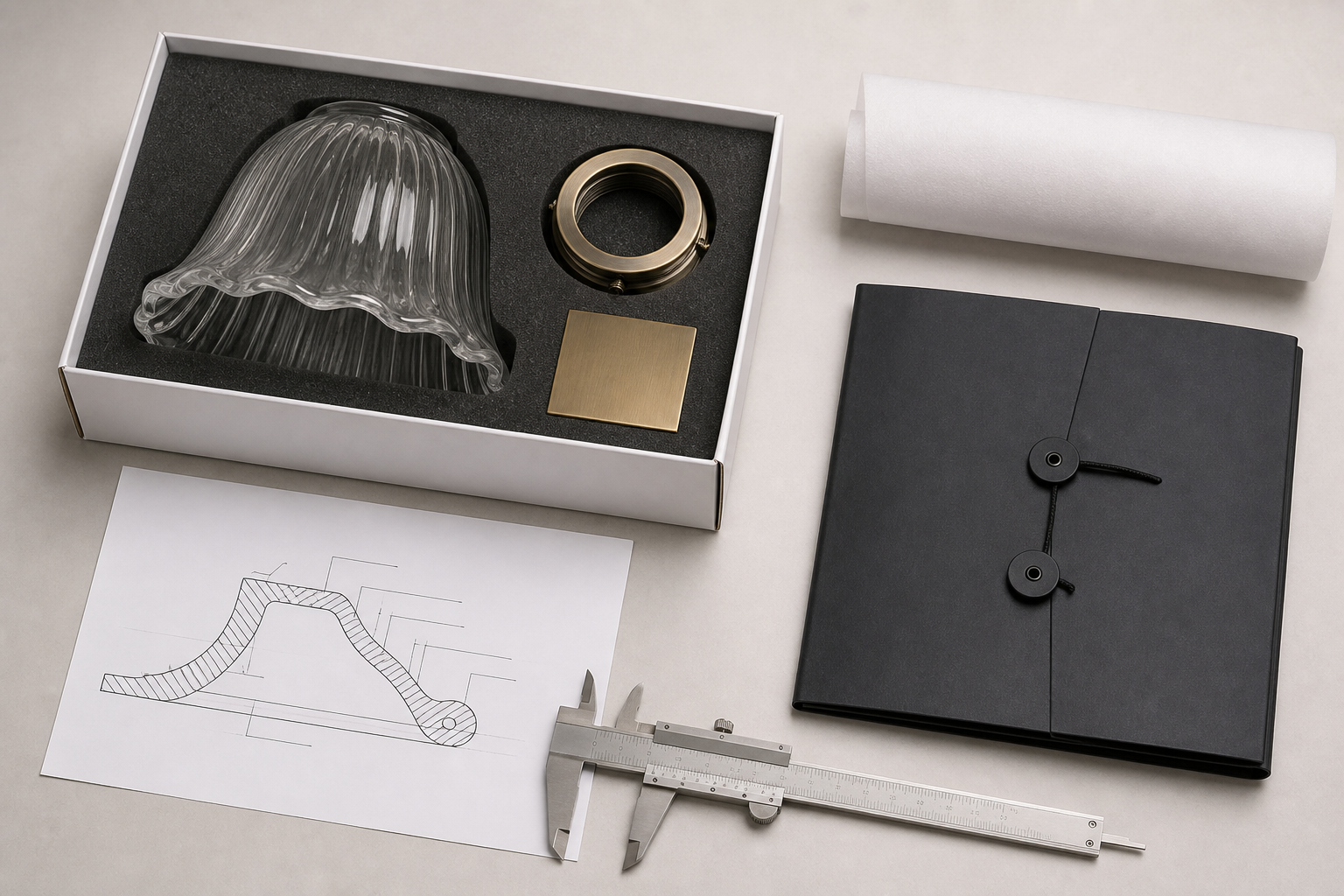
Send the supplier a compact package that contains:
- a section drawing showing the rim profile and controlled surfaces;
- the fixture or holder drawing, production hardware, or a validated gauge;
- the requested edge condition and an acceptable alternative for supplier review;
- critical dimensions and the point in the process when they are checked;
- an appearance reference for any exposed polished or fire-polished rim;
- the intended glass family, forming route, quantity, and application;
- inspection zones, defect examples, and revision control;
- packaging protection for exposed or contact-sensitive edges.
Use the custom lamp shade RFQ builder to organize the project details, then attach the section view and hardware reference. Ask the supplier to return any proposed process change on the drawing before sample production.
Frequently asked questions
Is a seamed glass edge the same as a polished edge?
No. Seaming normally removes the sharp margins while leaving much of the cut face matte or rough. Polishing follows more complete grinding and produces a clearer or glossier edge face. Define the profile and visual target because terminology varies by factory.
Is fire polishing better than grinding?
Neither method is universally better. Grinding is useful for size, flatness, and contact control. Fire polishing can create a rounded glossy surface on compatible glass and geometry. The right choice depends on fit, exposure, glass type, process route, and the supplier's confirmed capability.
Can a fire-polished rim still be out of tolerance?
Yes. Heat can soften and move the edge. Measure the final part after fire polishing and define which diameter, height, profile, or gauge fit controls approval.
Should a hidden fitter rim be polished?
Not always. A properly seamed or ground rim may be suitable when the holder hides it. If the rim carries load, controls orientation, or touches a gasket or ring, dimensional and contact requirements may justify additional grinding or a different profile.
How should buyers specify acceptable edge chips?
Mark critical zones and agree on the inspection method, size range, location, and reference examples with the supplier. A single universal chip limit is not appropriate for every shade, edge function, wall thickness, or application.
Does a smooth rim prove that the glass is safe or tempered?
No. A smooth appearance only describes the surface. Material condition, heat treatment, residual stress, fixture design, assembly load, and application requirements need their own evidence and review.
Make the rim decision before the sample is made
An edge note should tell the supplier what the rim does, which surface matters, how it should look, and how the finished part will be checked. Once those points are clear, the process name becomes useful instead of decorative vocabulary.
For a custom project, send the edge detail, holder reference, quantity, and application for review. The supplier can then confirm whether the proposed rim should be seamed, ground, mechanically polished, fire-polished, or revised for the selected manufacturing route.